
The timing of tackling business debt can be just as important as the action itself. Plenty of businesses delay addressing debt anyway because they hope that the improved cash flow or future growth that they are planning for will resolve the issue naturally. Of course, this is an approach that can work in limited situations, but those situations are limited for a reason. Waiting too long often allows interest in financial pressure to compound. You need to act at the right moment before that debt becomes overwhelming to protect yourself and your long term potential.
Early intervention gives your business more options. When the debt is addressed proactively, companies are better positioned to negotiate with creditors and restructure repayments. Cash flow is typically more flexible at this stage, making it easier to balance operations and debt reduction. Leaving the unchecked camera structure access to funding and strain your relationships with your suppliers while forcing reactive decisions that limit your growth rather than encourage it.
Markets, interest rates, and business performance are all going to be affected by timing. These things are constantly changing, and periods of steady revenue or strategic transition can often present ideal opportunities to deal with outstanding obligations. Tackling debt during these windows will create stronger financial foundations and reduce future risk. The infographic below should explain settling your business debt a little bit more.
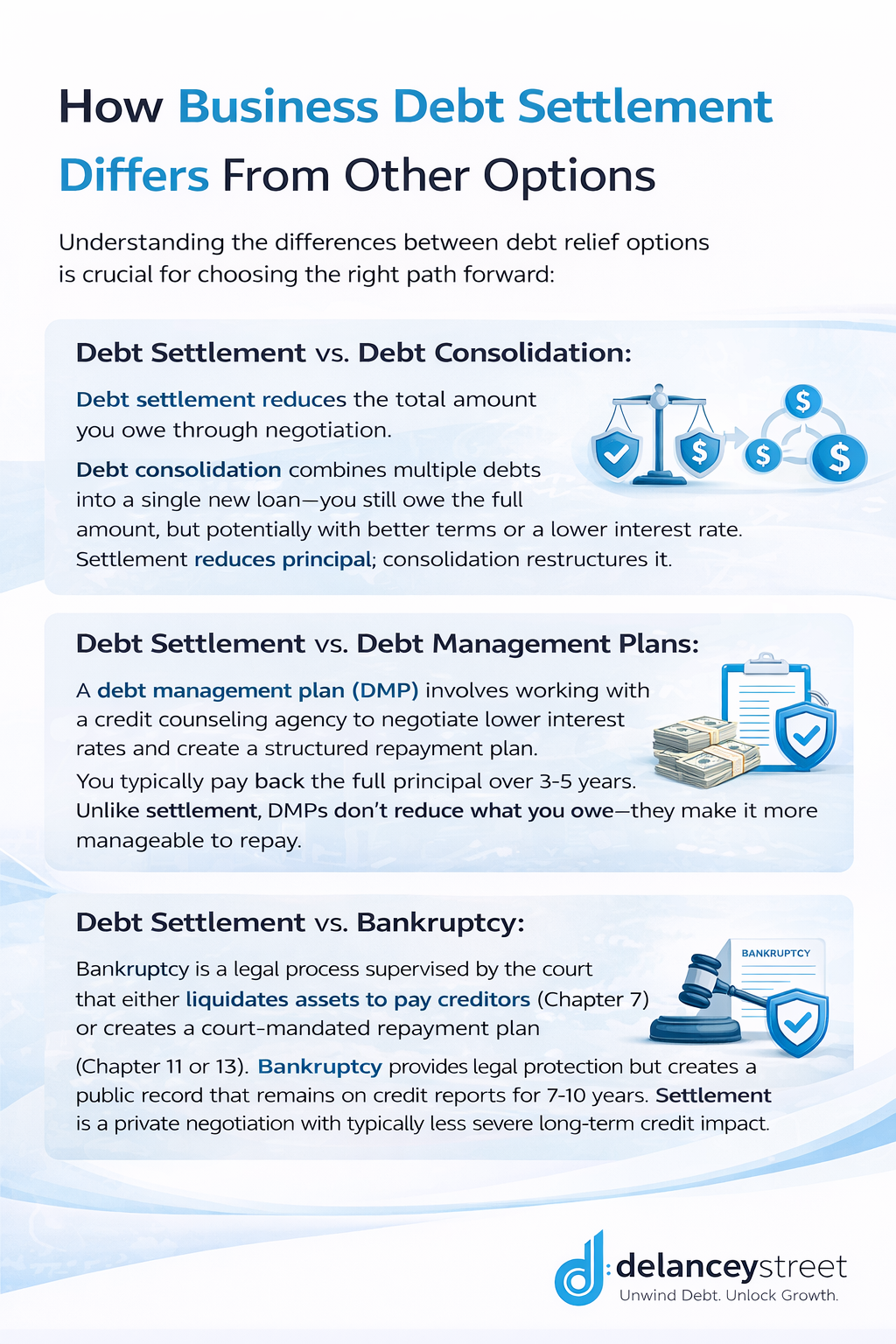
Infographic designed by Delancey Street