

This post is a guest post from Shawn, who writes at New Millennial Investor. Over the past year, Shawn has been very successful selling furniture on consignment. He has made over $3,000 in profit through his hustle! In this side hustle guest post series, you can learn how to sell furniture, make extra income, and sell on consignment. Starting a side hustle selling on consignment might be for you. Read on below to learn how to sell on consignment to make more money.
I’ve worked at a pair of consignment furniture stores for over ten years, and managed consignment stores for six years. Throughout this time, I’ve learned a thing or two about selling items on consignment.
Unfortunately, I never took advantage of consigning items myself until last year.
Boy, am I glad I started.
In the one year I’ve been consigning items, I’ve sold over $8,000 worth of furniture and other merchandise. This has netted me over $5,000, and over $3,000 in profit.

Consigning furniture and other accessories is a lot of fun, and has been lucrative for me.
In this post, I want to share with you my consignment store story, talk about how you can sell on consignment, and provide an overview of the potential of starting a consignment store side hustle.
How to Make Money Selling on Consignment
As mentioned above, I started selling my own purchases on consignment about a year ago.
The very first item I consigned was a desk I bought for $43.78 from an auction.
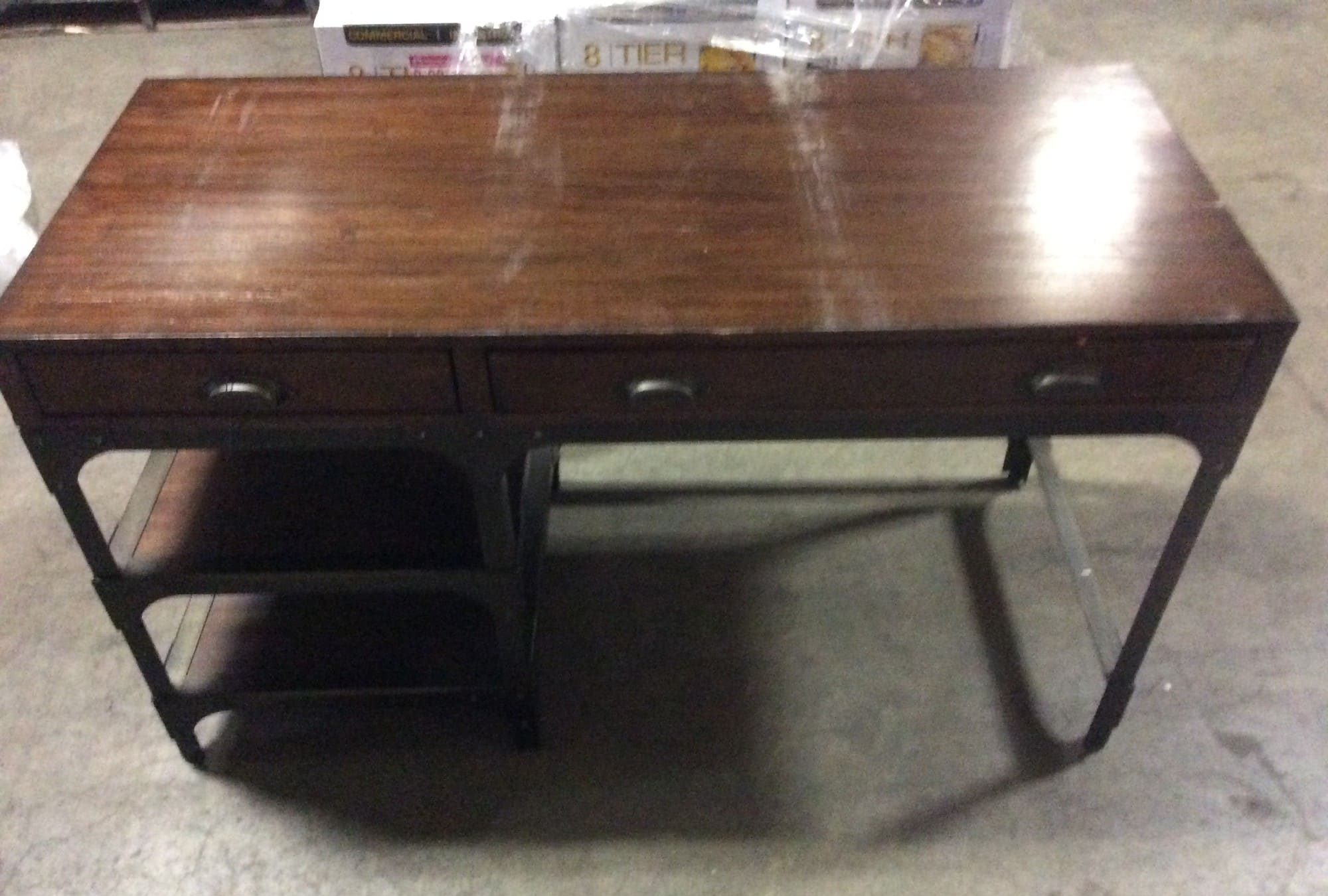
Even though it took almost six months to sell, we eventually sold it for $295, and I received $177 (60%) of the sale.
I only paid $43.78 for it, which means I made a profit of $133.22 – a return of over $300%!
With this first sale, I was hooked. A profit of $133.22 was like getting paid for a full day of work!
Even as I’ve learned about other hustles and ways to invest, I still don’t know where else a person can get these kinds of returns for such little work.
All I had to do was bid on the item, pick it up, touch up any defects and then list it.
Even though it took 6 months to sell, when I got that first $177 check, it felt amazing. I felt empowered. It felt good to know that I could accurately pick out, price, and sell items on my own.
My side business as a furniture consignment store flipper was born.
This has been such a lucrative side hustle that I wanted to share the details of how anyone can do it.
However, there are a few caveats I have to mention which could make your experience different than mine:
- I work at a consignment furniture store which has been around for over 30 years and has a good reputation.
- Also, because I’ve worked there for so long, I have extensive knowledge on what does, and does not, sell in our stores.
- Finally, I’m able to bring items in on my own, and price and list them myself. This makes it much easier than if you just were to bring items in on your own to a store.
Still, there’s no reason you can’t duplicate my results.
I hope this guide proves useful to help you consign items at your local consignment store. Let’s get into the guide on selling items on consignment, and how you can make money selling furniture on consignment.
In this post, I’ll be sharing with you how consignment works, what is consignment store, how much you can make selling furniture, and how to make money selling on consignment.
What is Selling on Consignment?
First, what is consignment and how does consignment work?
Consignment is an arrangement between you and a consignment shop where you leave goods and products at the store, and they will sell it for you.
Selling your items on consignment means you bring your items into a store for the store to sell on your behalf.
When the item sells, you receive a portion of the selling price, with the store receiving the remainder.
Pretty simple, right?
Typically, the store you will bring your items and merchandise to are called consignment stores.
What are Consignment Stores?
Consignment stores typically will focus on one type of product or piece, whether that’s clothing, furniture and home goods, antiques and collectibles, etc.
Usually, consignment stores have higher quality pieces of goods, and you can sell nice furniture and other high quality home goods at consignment stores.
For the purpose of this article, I will be talking about selling furniture at consignment stores.
How Does the Consignment Process Work?
Let’s talk about how consignment works.
If you want to make money selling furniture like I do, then understanding how consignment works is a great first step to selling on consignment.
The general consignment process is most likely the same no matter where you go.
- You bring your item into the store to be sold during a certain period of time.
- After your item sells, you receive a portion of the selling price, usually 40 to 60 percent (I receive 60).
- This portion is called the “Consignment Percentage” or “Consignment Fee”. The higher the consignment percentage, the better for you, but usually around 50 percent is fair for the consignment percentage.
There may be additional stipulations you have to agree to when you consign your items, such as:
- Adhering to the store’s markdown schedule
- Relinquishing your item to the store after so many days have passed
- Relieving the store from liability if something happens to your item, e.g., it breaks
Every store will have different policies and these policies will be made clear in the consignment agreement and consignment rules for that consignment shop.
Before you just start lugging stuff over to your local consignment store, you’ll want to inquire about the store’s policies and procedures to make sure you are on the same page.
Now, let’s talk about some of the items you can consign.
What Kinds of Consignment Products Can You Sell to Make Extra Income?
There are a number of different products you can sell on consignment to make extra money.
When we’re talking about home goods, there is practically an unlimited amount of products we can sell.
For my consignment side hustle, there are four types of products which I focus on consigning:
- Furniture
- Accessories
- Lamps
- Artwork
While every store accepts different items, our store has always accepted a pretty wide variety of items, focusing on high-end consignment furniture. We also carry new accent pieces, home decor and accessories, like lamps, artwork, mirrors, etc.
While I mostly dabble in selling nice furniture and furniture flipping, I’ve also sold other home goods, like lamps, artwork, and various accessories like cains, statues, and trinkets. I’ve even sold stuff I’ve found in other stuff, like a set of drawer dividers I found in a chest I purchased.
Depending on where you live, you may not have a local store that specializes in reselling high-end stuff. Depending on your local store, they may take a wide-variety of things, or are more narrow in what they accept.
To make it easier on yourself and the stores, you’ll want to make sure the items you’re consigning meet three stipulations.
What Is Important When Consigning My Items?
When it comes to consigning furniture, from my experience, there are three important qualities of an item. These important qualities include:
- the item is made from high quality materials
- the item is in good condition
- and the item is in demand
It’s not rocket science – people want things which are nice!
The best items to consign are items that are high-quality, in great condition and are in style now.
So, how do you know what’s a good quality or not?
It’s generally not too difficult, provided you can identify the brand. Identifying the brand is the easiest way to determine a product’s quality.
I generally avoid items with no brand because it’s much harder to sell items with no brand recognition. That being said, if you’re flexible in pricing the item as if it’s a lower tier piece, you may be able to sell it.
Examples of Furniture Brands to Sell in Consignment Stores
A piece of furniture’s price is directly related to its quality. A $2,000 sofa is going to be of a much greater quality than a $200 one. That’s simply the way furniture is made.
For me, I want to be able to flip nice furniture, as these will have the best margins, but I still will flip the low-tiered pieces of furniture if they are available.
That being said, there are ranges to quality. I categorize them into top, mid, and low-tier.
Let’s dive into each of these tiers.
Top Tier Furniture Brands for Consignment Store Selling
The top tier brands of furniture makers are going to be the best quality, and be the highest price. By knowing these brands, you might be able to find an undervalued piece with a big potential for profit.
The pieces made by these brands are known for their high quality, timeless beauty, and traditional design. The items from these top tier brands are popular all over the world, using traditional designs that have been beloved for centuries.
Pieces made by these brands are made of solid wood, are hand crafted, and feature beautiful fine-details like inlay, carvings, and painting. They’re also typically made in the United States.
If you find pieces from these brands for cheap (or free!), you’ll want to snatch them up.
The top tier furniture manufacturers include:
Mid Tier Furniture Brands for Consignment Store Selling
A step down from the top tier furniture brands are the mid-tier furniture manufacturers.
The pieces made by these brands are good-quality, but are not considered “fine furniture” like the makers above.
Pieces made by these brands are usually a mix of solid and manufactured wood. Some of the pieces are made in America, while others are made overseas. They can still include nice details such as inlay and hand-carving.
The mid tier furniture manufacturers include:
- Ethan Allen
- Lexington
- Sherrill
- Drexel
- Harden (no longer being manufactured new)
- Hooker
- Hickory White
- Thomasville
- Sam Moore
- Restoration Hardware
- Stanley
- Crate and Barrel
- Pottery Barn
Lower Tier Furniture Brands for Consignment Store Selling
Finally, we have the lower tier furniture manufacturers.
I generally avoid lower-tier furniture manufacturers. The pieces made by these manufacturers aren’t very high-quality, are usually made with cheap materials, and are all made overseas.
The lower tier furniture manufacturers include:
Now that we’ve talked about brands, I will provide a number of examples of items I’ve sold on consignment to give you a taste of what is possible.
Examples of Furniture Items Sold on Consignment
As I mentioned above, there are so many different things you can sell on consignment.
For my consignment selling side hustle, I’ve focused on upholstery, case goods, and accessories.
Within each of these categories, there are a number of items which you can find at different auctions, thrift stores, estate sales, or online.
Before going into how to find these items, I’m going to share with you all of the different items I’ve sold in the last year.
Upholstery Items Sold on Consignment
Upholstered pieces are any items that you can sit or rest on. Upholstery includes:
- Sofas
- Club Chairs
- Side Chairs
- Dining Chairs
- Ottomans
Below are examples of sales in each of these different upholstery pieces.
Selling Sofas on Consignment
An example of a sofa I’ve sold is this Ethan Allen Whitney sofa.
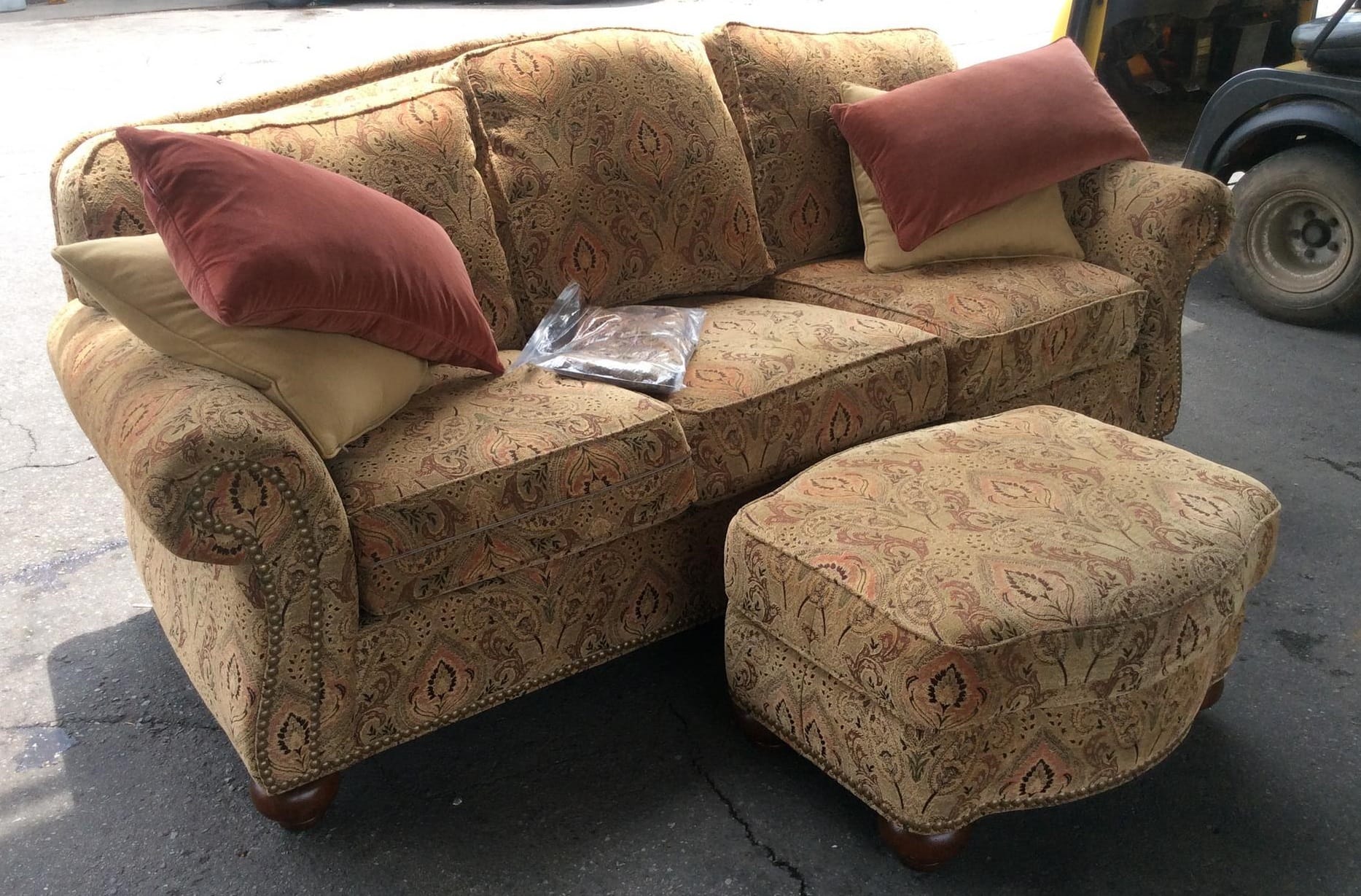
This sofa sold for $600.00. Originally, I purchased this sofa (with an ottoman) for $156.35. After the sale, I received $360 – a profit of $203.65!
Selling Club Chairs on Consignment
Club chairs are large arm chairs, usually designed for lounging or curling up on.
An example of a club chair I’ve sold is this C.R. Laine club chair with ottoman.
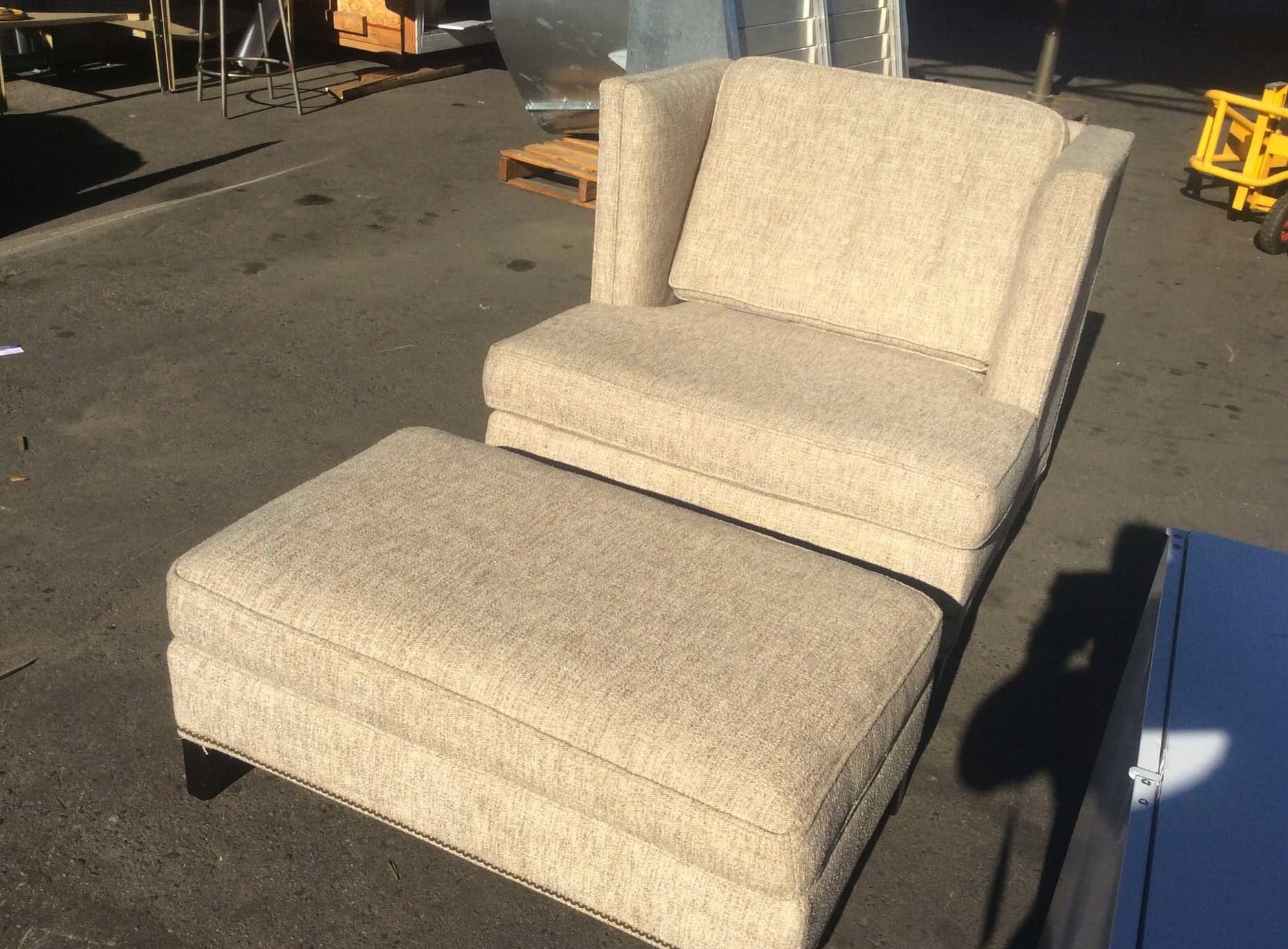
I purchased this chair for $87.56, and it sold for $350.00. My cut was $210.00 – a profit of $122.44!
Selling Side Chairs on Consignment
Side chairs are chairs that don’t have arms, are usually smaller, and are designed to be used for desks, tables, or as occasional chairs.
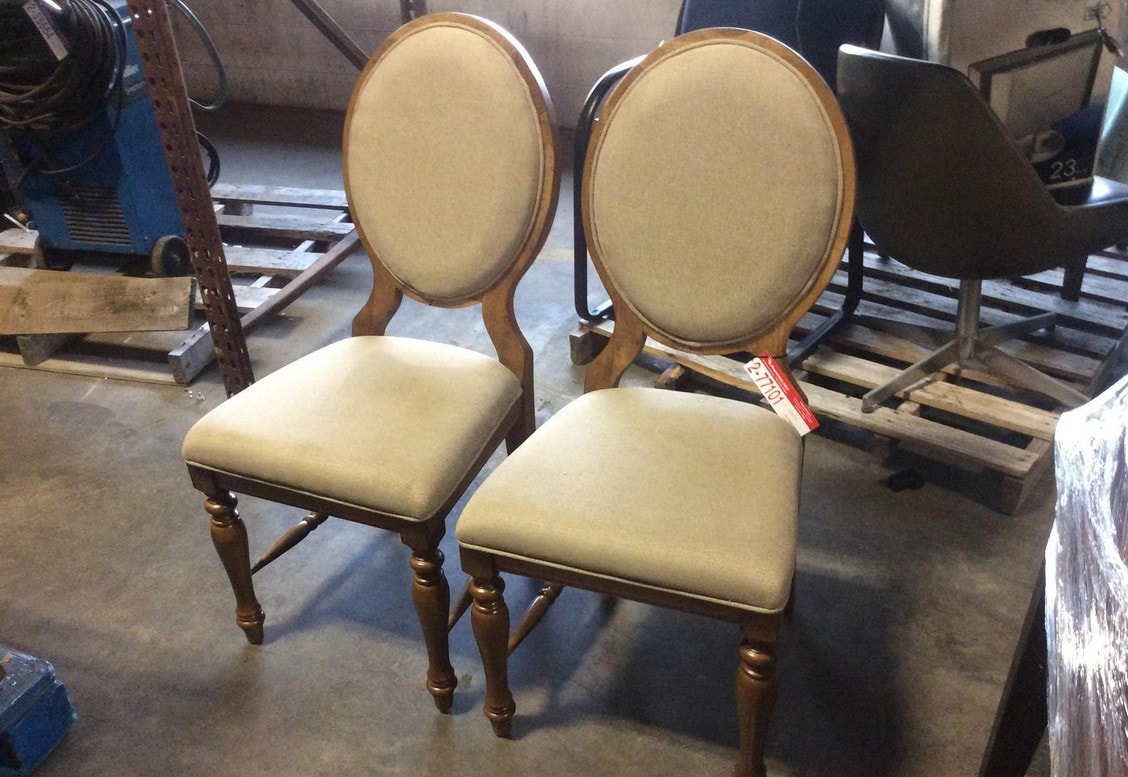
An example of a side chair I’ve sold were these two upholstered side chairs. I purchased this set for $31.27, and they sold for $200. My cut was $120, which resulted in a profit of $88.73!
Selling Dining Chairs on Consignment
An example of dining chairs I’ve sold are these TON dining chairs. I purchased a set of six for $106.32, and they sold for $595. After receiving my cut of $357, I ended up with a profit of $250.68!
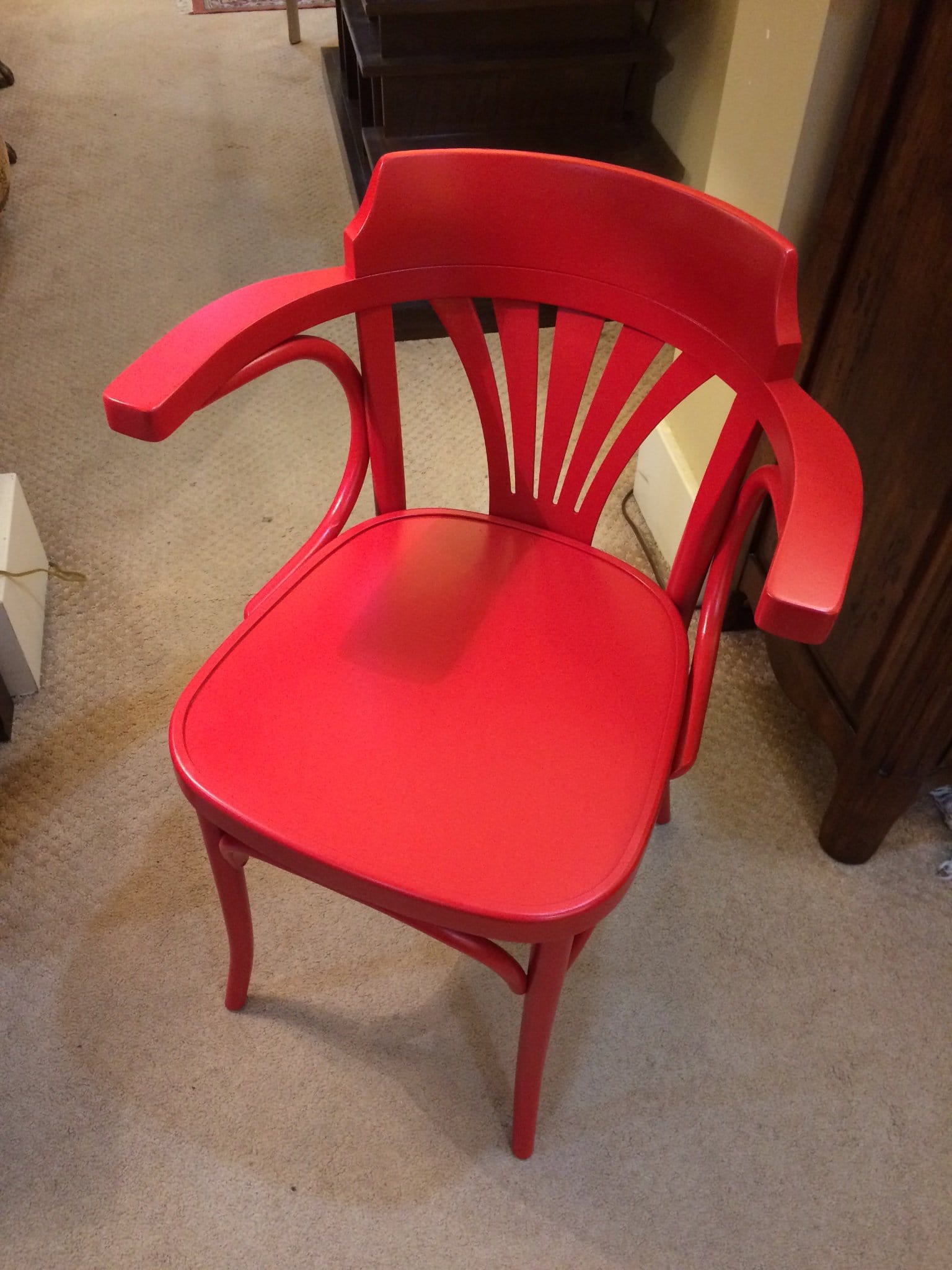
Selling Ottomans on Consignment
Ottomans are low footrests designed to be used as a footrest or cocktail table in front of a sofa.
An example of an ottoman I’ve sold is this Fabric Possibilities ottoman that sold for $250.00.
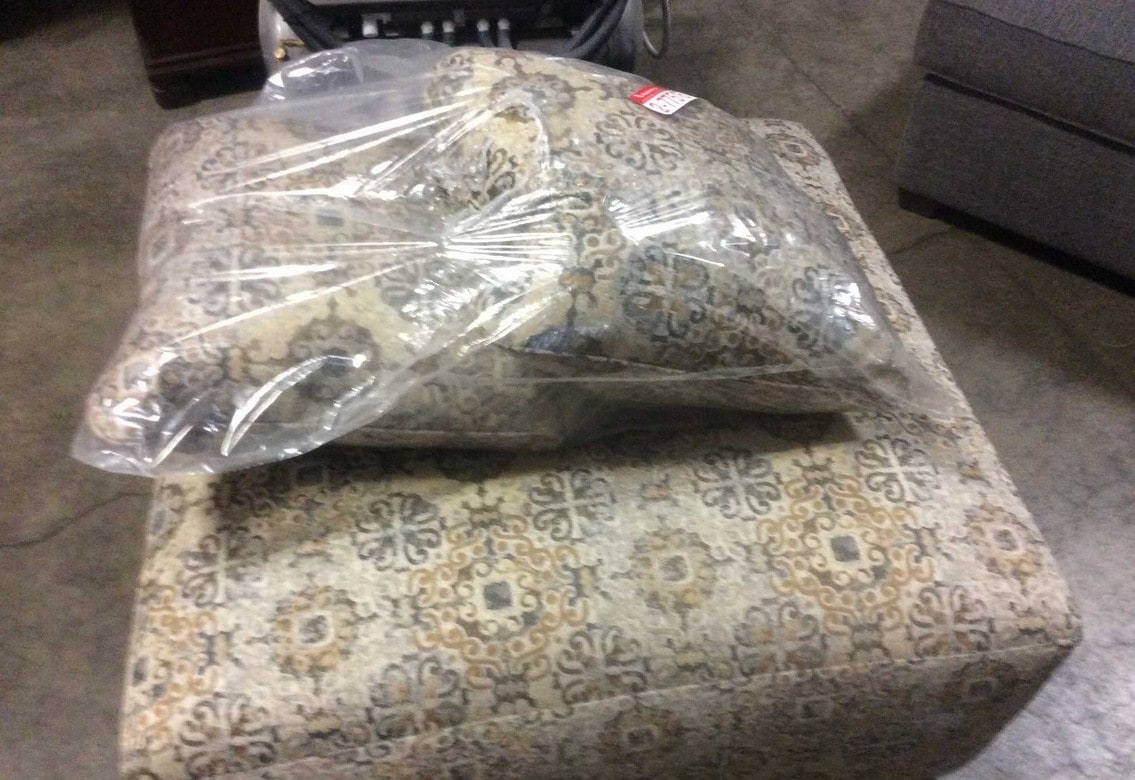
I originally had purchased it for $31.27, and after receiving $150 – I ended up with a profit of $118.73!
Case Goods Items Sold on Consignment
Case goods are another type of furniture item I’ve consigned.
The term “case good” refers to an entire category of furniture, usually made out of wood, that either serve as storage or other practical functions.
This ranges from side tables and dining tables to pieces like chests, dressers and nightstands.
Selling Dining Tables on Consignment
Dining tables come in a variety of shapes, sizes, colors, finishes, etc.
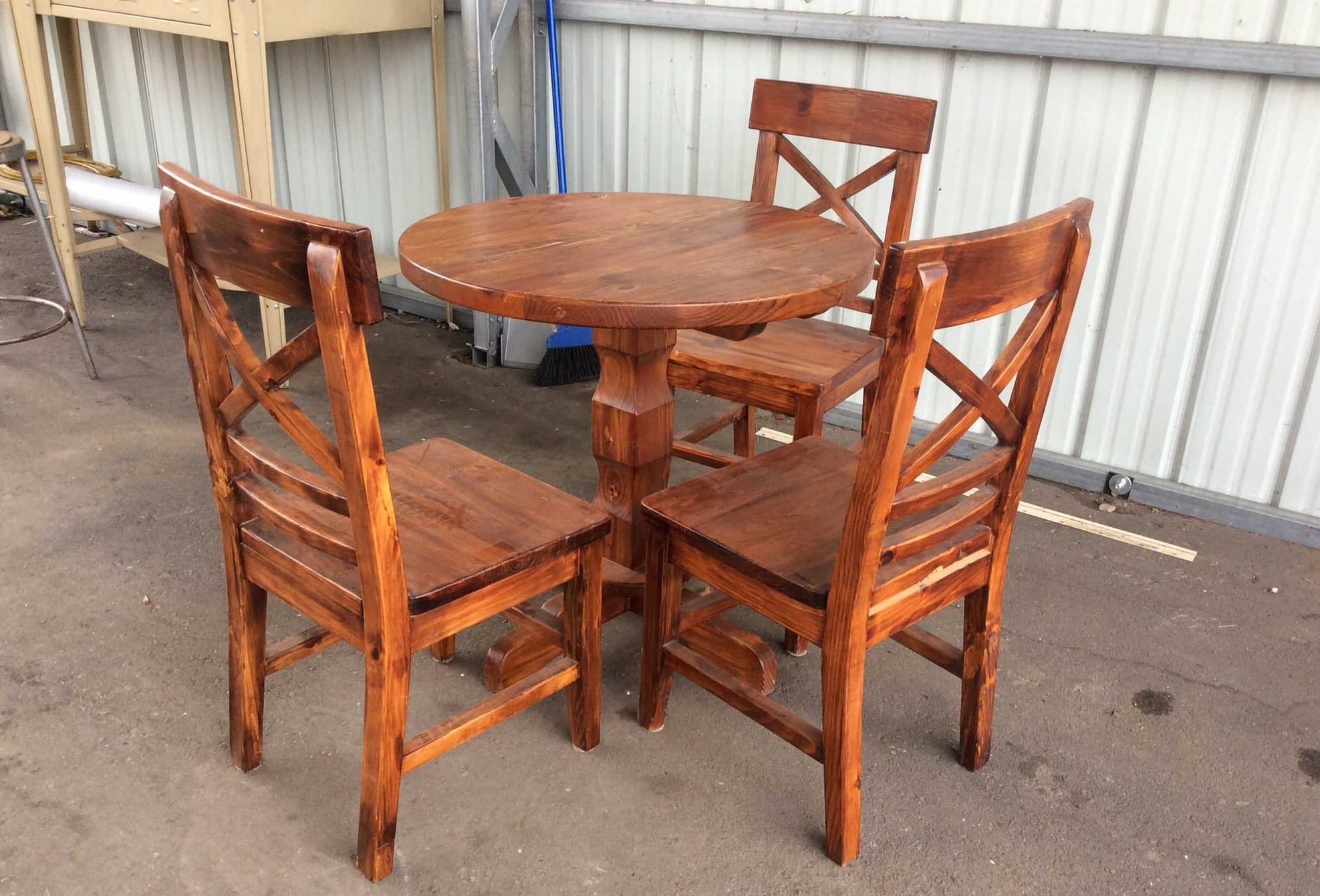
An example of a dining table I’ve sold is this rustic four-piece set that sold for $350.00. I purchased this dining table for $107.57, and received $210 – a profit of $102.43!
Selling Desks on Consignment
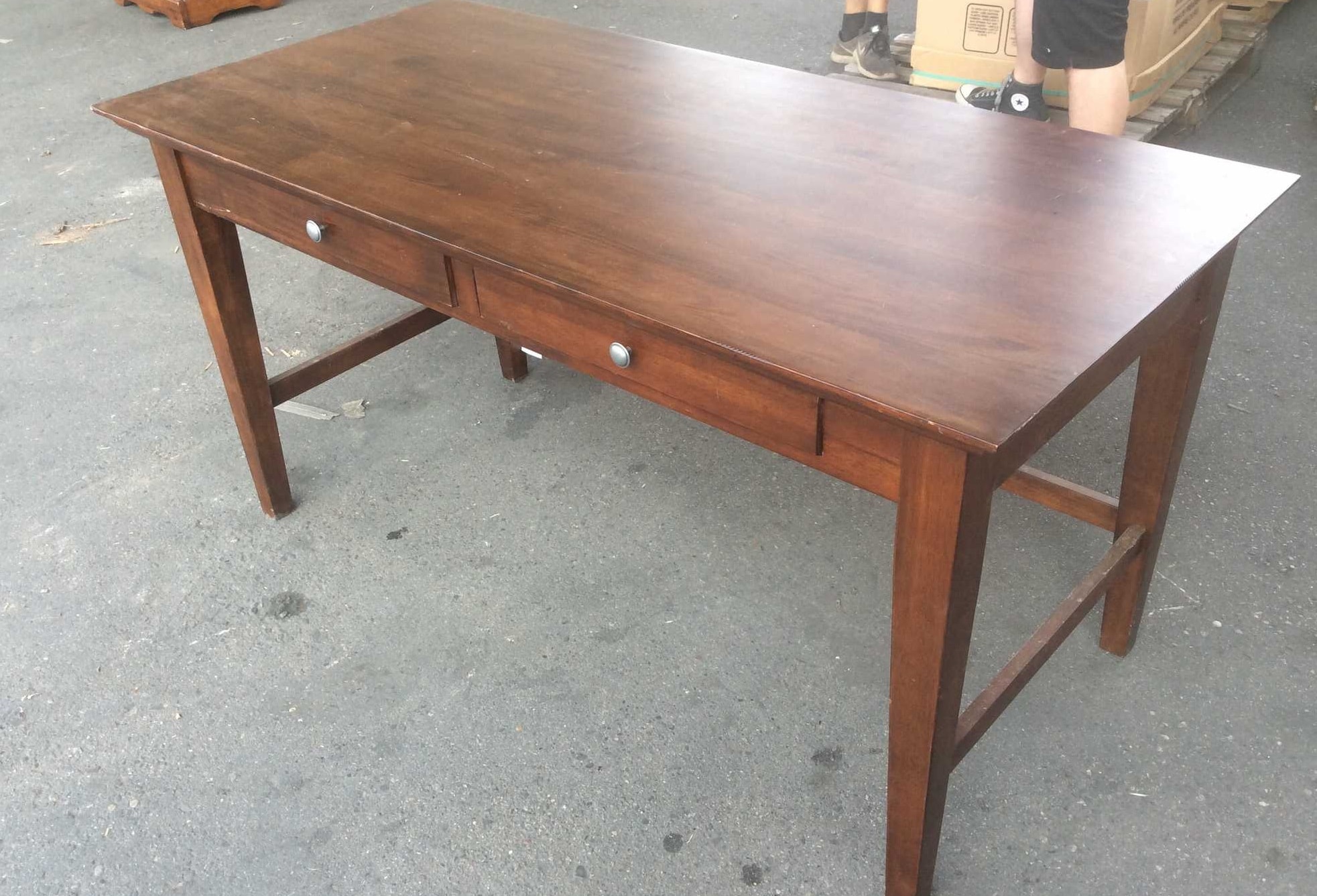
An example of a desk I’ve sold was this cherry writing desk that I sold for $175 in cash. I purchased the desk for $38.77, netting me $136.23 in profit!
Selling Side Tables on Consignment
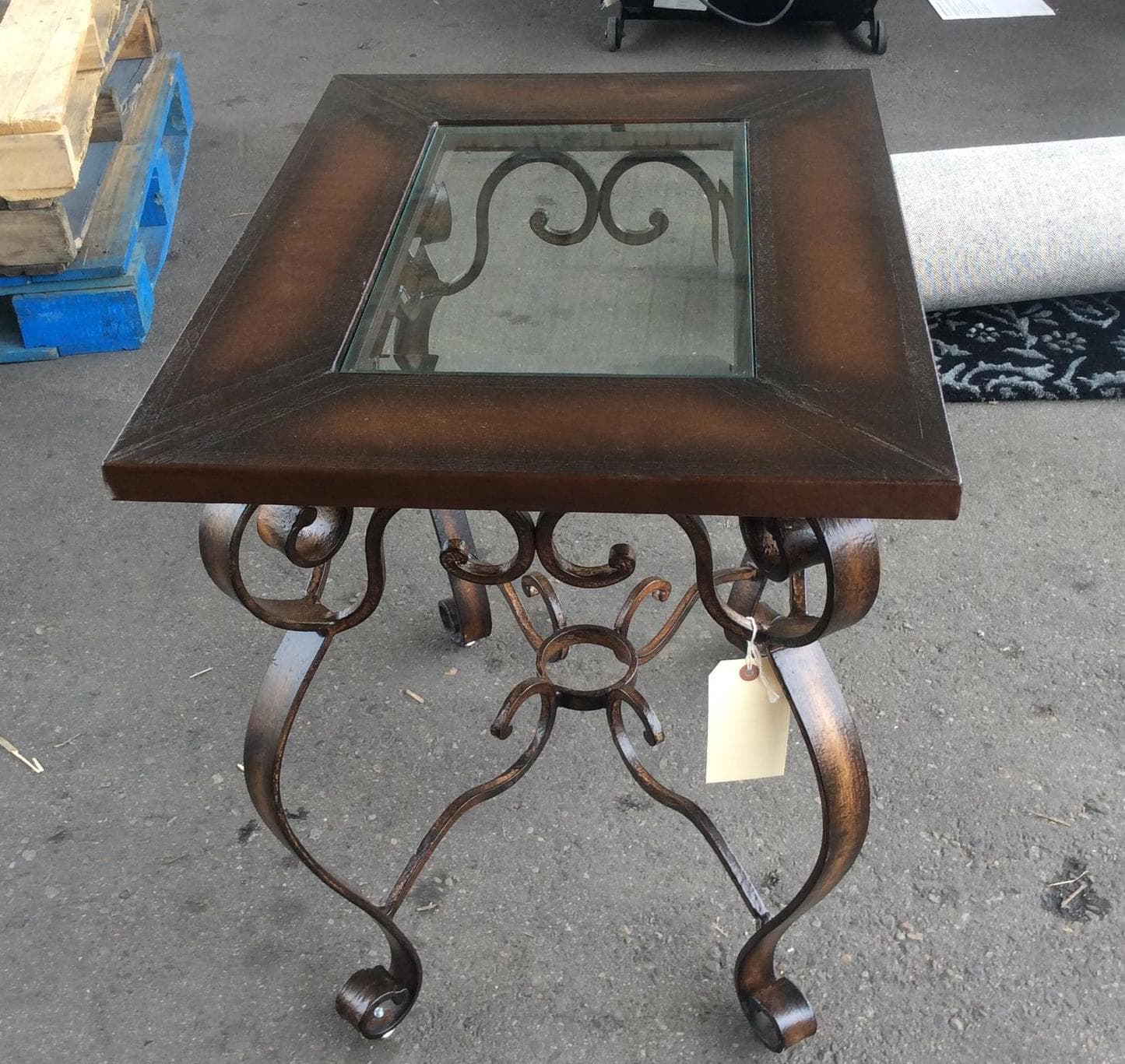
An example of a side table I’ve sold is this leather top side table. This side table sold for $195.00. I purchased it for $25.02, and received $117 after the sale – a profit of $91.98!
Selling Cabinets on Consignment
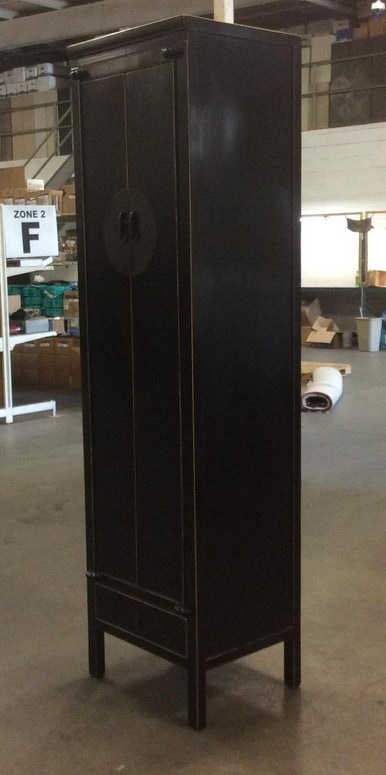
An example of a cabinet I’ve sold is this tall oriental cabinet.
This cabinet sold for $495.00. I purchased it for $75.05, and after the sale, I received $297. This resulted in a profit of $221.95!
Selling Dressers on Consignment
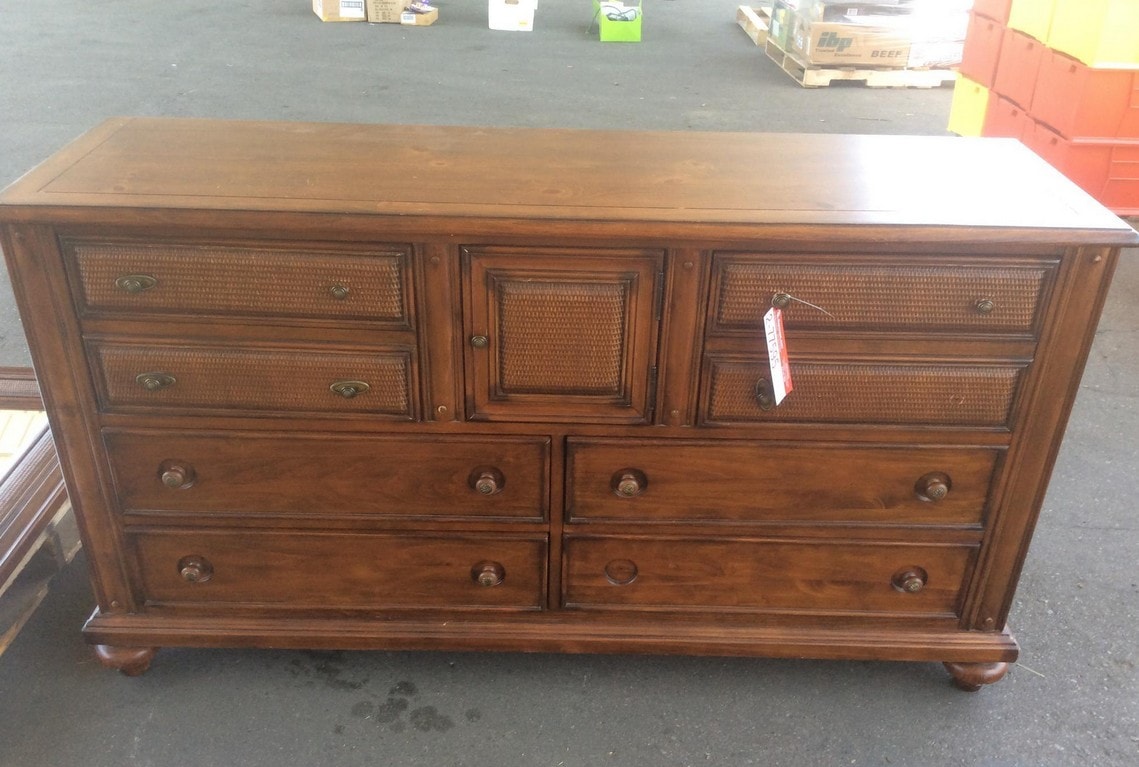
An example of a dresser I’ve sold is this Harden dresser that sold for $495.00. I purchased it for $68.79, and after the sale, I received $297. This resulted in a profit of $228.21!
Selling Chests on Consignment
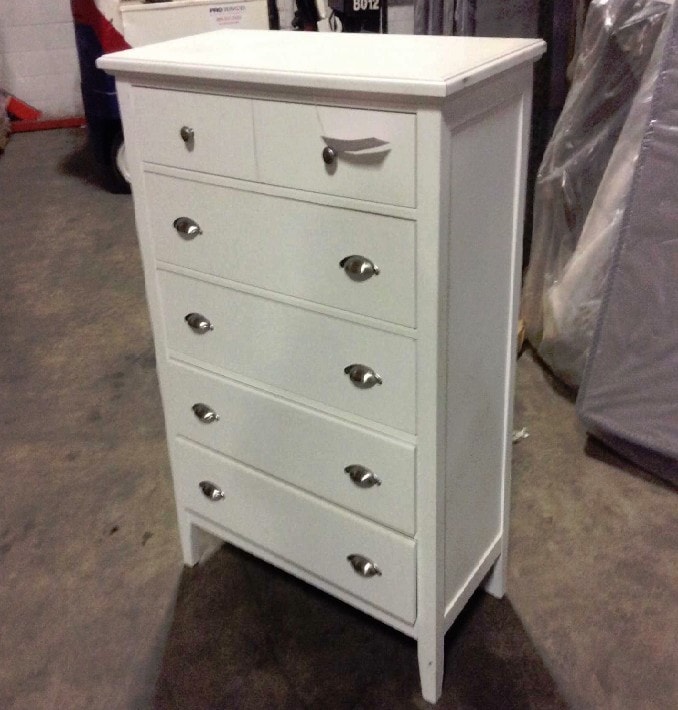
An example of a chest I’ve sold is this Vaughn-Basset chest that sold for $300.00. I purchased it for $93.81, and after the sale, I received $180. This resulted in a profit of $86.19!
Selling Nightstands on Consignment
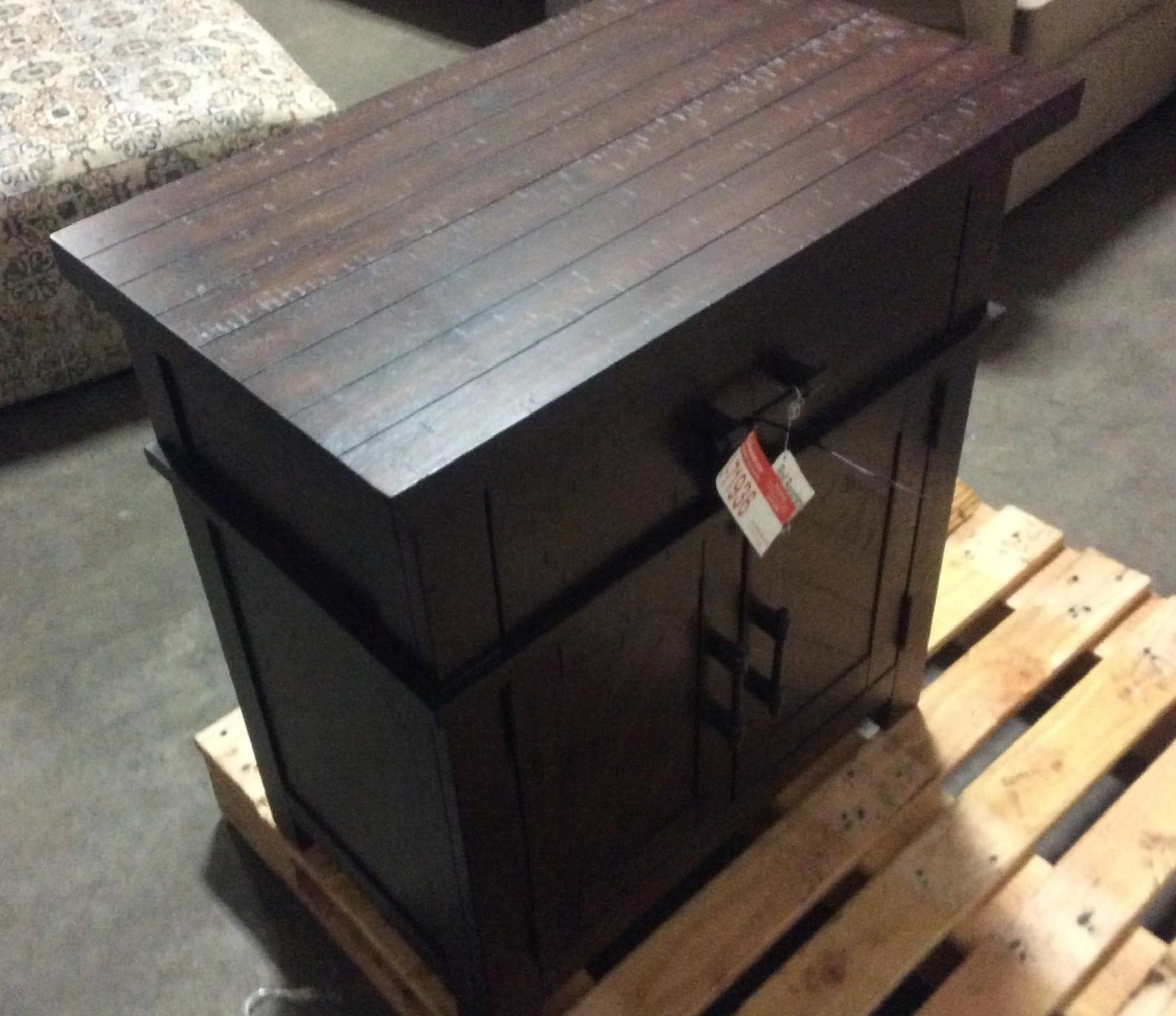
An example of a nightstand I’ve sold is this rustic nightstand that sold for $225.00. I purchased it for $62.54, and after the sale, I received $135. This resulted in a profit of $72.46!
Accessory Items Sold on Consignment
Finally, there are some accessory items which I’ve sold on consignment. These items could include decorations or functional add-ons to another furniture piece.
Selling Drawer Dividers on Consignment
An example of an accessory I’ve sold are these drawer dividers.
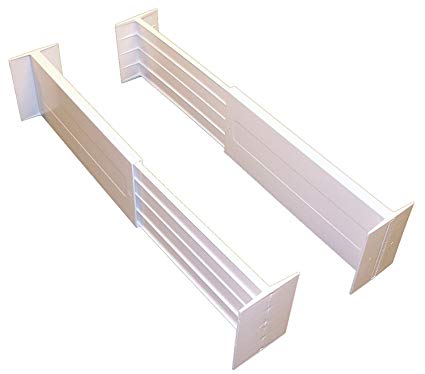 I got these for free from a chest, and they sold for $35. I received $21 of that $35, a nice $21 profit!
Selling Elephant Statues on Consignment
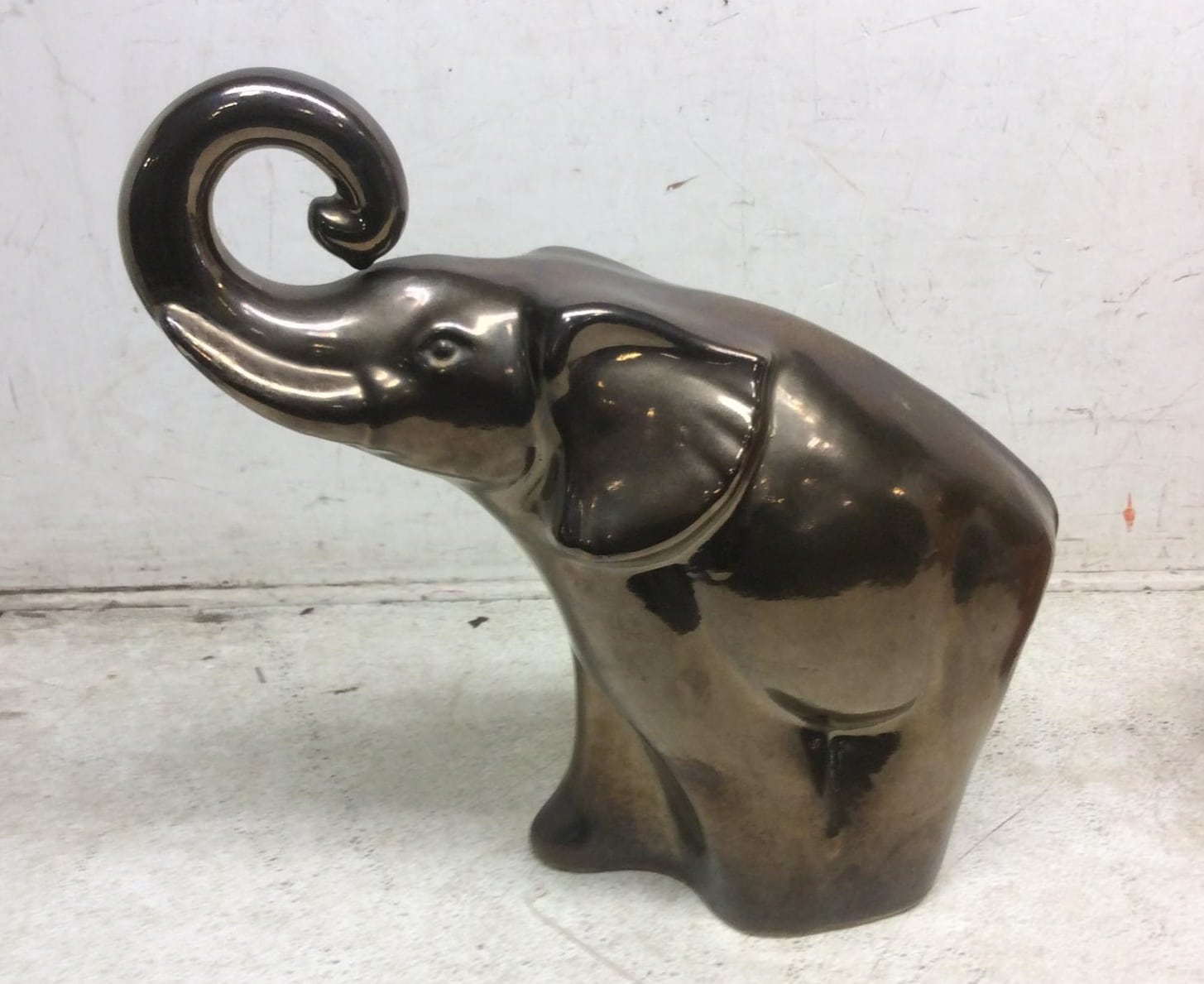
Another example of an accessory I’ve sold is this elephant statue. This elephant statue sold for $35. I purchased it for $6.25, and after receiving $21, ended up with a profit of $14.75!
All of these items and examples I’ve listed above can be found and sold. It might take a while to find an underpriced item, or one which you can sell for a lot, but there are deals out there.
Now that I’ve shown you a number of examples of furniture pieces I’ve sold, I will talk about some of the techniques and strategy behind consigning items as a side hustle.
How to Determine if an Item is Worth Selling
Because you (most likely) don’t manage a consignment store, it won’t be up to you to set the price – the store will.
Unfortunately, this leaves you at the store’s mercy.
So, you are left with the question, “how do you know if an item is worth selling if you don’t get to set the price yourself?”
As a rule of thumb, for items which are brand new to a year old and in good condition, you can expect to sell the piece for about half of purchase price. Then, depending on the piece’s quality and brand, condition, marketability, etc., I may go down from there.
While this rule doesn’t always work, I’ve found that it’s at least a good place to start.
For example, I sold this kinda hideous Ethan Allen Whitney sofa on sale for $600, after starting it at $795.

While it’s a nice quality sofa, the pattern itself is quite…unmarketable.
You can see on Ethan Allen’s website this line of sofas originally went for $3,000.00, and then on sale for $2,400.00.

That means, feasibly, I could sell my sofa for $1,200.00 then, right?
Not with that pattern.
See, an item’s desirability is directly determined by its marketability, which is determined by the piece’s quality, design, and appeal. The more narrow the appeal, the less likely your piece will sell. If an item is a high quality piece, but it’s in an ugly color or fabric, it won’t matter that’s it’s expensive.
It’s like painting a Lamborghini like a checkerboard. I mean, it’s still a Lambo, but… it’s a checkerboard.
Not a lot of resale appeal there.
That being said, I’ve had great luck with selling lots of pieces at half of purchase price or above. As long as your item is a good piece in good condition and it’s marketable, you should do fine.
Keep in mind that most stores have experience setting prices, and really it’s in their best interest to get as much for you (and themselves) as they can.
What Items You Should Consign
Now that we have talked about some of the strategy behind the mindset of the consignment stores, let’s talk about which items you should consign, and how you can source your items.
When thinking about which items to consign, this will be very dependent on where you live.
From the perspective of this post, I don’t have an answers which will cover everyone, and for you, this is probably going to be the most difficult question to answer.
There are so many factors that dictate what is going to be popular in your area.
In the city I work, we’re known for very traditional high-end furniture like this:


However, this may be totally different than the style typically seen in a downtown New York apartment.
Because of this, it’s going to be difficult for me to tell you what you should buy and consign.
The best way to determine what is popular with consignment stores in your area is to just ask your local store what’s most popular, and then try to find pieces like that, using the above criteria.
Next, let’s discuss where you can source items to sell on consignment.
Where to Source Items to Sell on Consignment
When flipping any retail merchandise for extra income, sourcing is the most important thing to focus on.
How you source your items most will most likely vary depending on where you’re located.
If you’re in a dense packed city, you may use garage sales more frequently than someone who lives in a rural area.
It’ll be up to you to figure out how best to source your items.
There’s practically an unlimited number of ways to get inventory, but a few great ways are:
- Auctions
- Garage Sales
- Trash
- Online, through Craigslist or Offer Up
Let’s go into each of these in more detail.
Using Auctions to Find Items to Consign
Auctions are a great way to find items to sell on consignment.
I mainly use auctions to source my items.
I’m lucky there’s a huge auction house just twenty minutes away from me which has a new auction every week with hundreds of new items, sourced from all over. The items come from private estates, repossessed pieces, clearance items from stores, etc., and there is a ton of variety.
Auctions are a great way to get good, high quality stuff from a diverse variety of sources, and generally at good prices.
Sometimes, you can get things for a steal if you have more knowledge than the average consumer.
Being knowledgeable about furniture (and being willing to do the research), has made all the difference. For example, I just won an auction for a set of four of these TON chairs for just $18.76.
You wouldn’t know it from looking at them, but these normally retail online for over $300 a chair.
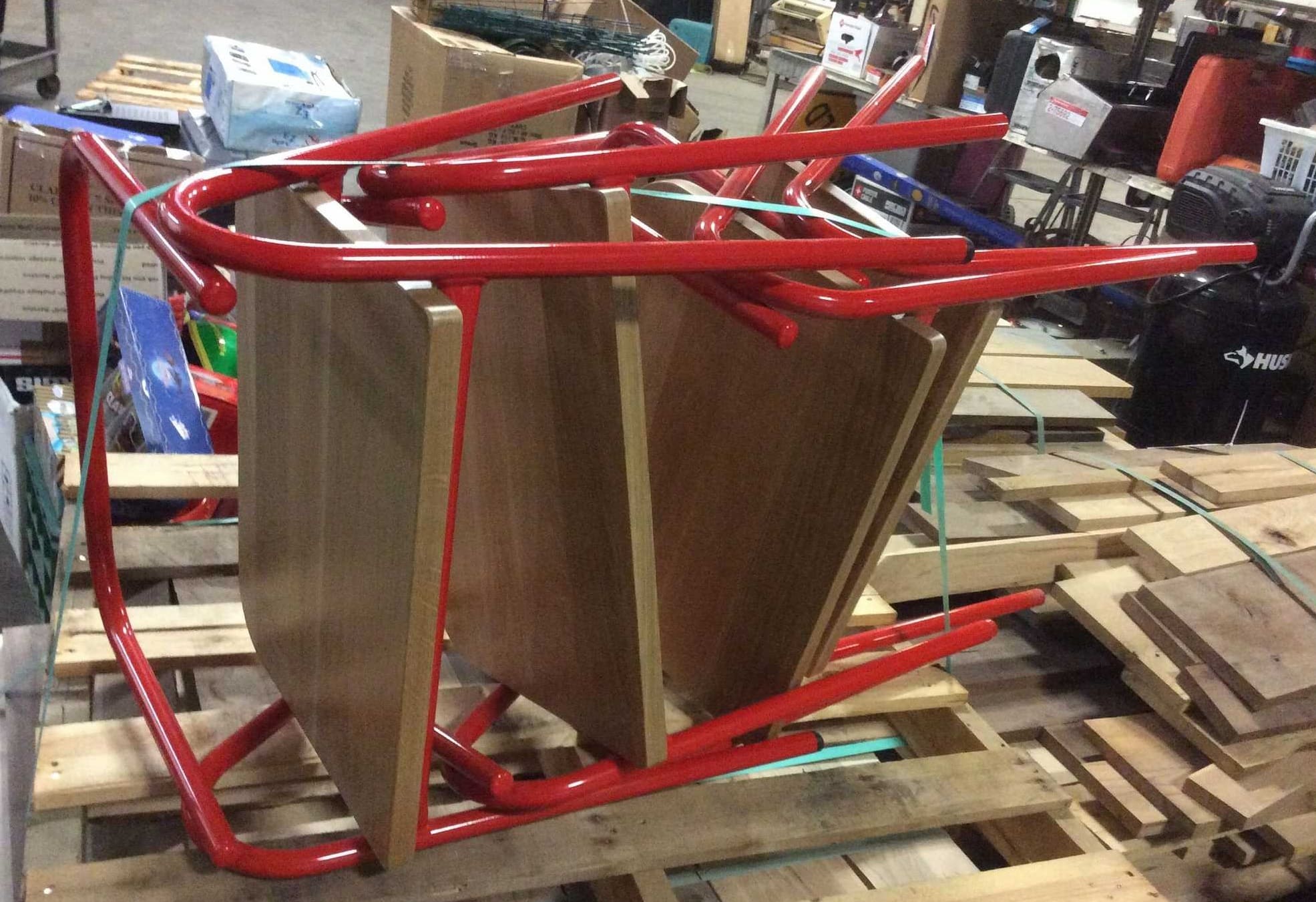
The only reason I won them was because I recognized the potential in them and then did my research.
For me, much of my knowledge comes from knowing, understanding, and appreciating fine furniture.
It’s not something I was planning to get into, but it was where I went in my professional life, and now I understand a lot about the industry.
Perhaps you have a skill or knowledge about a particular industry that you can leverage in this way?
Here are a few sources to help you find auctions in your area:
Using Garage Sales and Estate Sales to Find Items to Consign
Garage and estate sales are other places you can find items to consign.
I don’t really go to estate or garage sales too frequently because, quite frankly, most people don’t purchase high-end furniture.
The average person doesn’t really have an appreciate for fine furniture. And why would they? They have kids and pets and relatives, and any number of things that aren’t really compatible with having a $25,000 dining table.
Not exactly practical.
However, estate sales can still be a good way to get good furniture, provided that the estate doesn’t belong to a person a million years old.
Unfortunately, I don’t have many tips I can offer on estate sales, but I will say:
- Bring cash or a check
- Get there early
Most garage/estate sales will be cash only, so you don’t want to get caught with your pants down only having a card.
Also, most garage/estate sales can be pretty popular, so the earlier you get there, the earlier you’ll have access to the best stuff.
I locate estate sales with the following website: Estate Sales Org.
Can You Find Items to Sell in the Trash?
Sometimes in the trash, you can find treasure. Looking in the trash can sometimes lead to finding items to consign.
I haven’t found furniture this way myself, but I’ve heard of many people getting perfectly good furniture from the side of the curb.
Always be sure to ask if you can have something before just taking it, though.
I once made the mistake of leaving a couple tables near the curb in our yard while I went to go pick up some more items from an auction, and when I came back they were gone. That really made me mad.
So I’ll say it again: don’t just take stuff from people’s yards.
Can You Find Items on Craigslist/Offer Up to Sell?
Finally, you can find items to consign online by using different apps and marketplace websites.
I haven’t gotten any of my items from Craigslist or apps like Offer Up, but I have heard of people successfully sourcing items from there.
If you have an eye for furniture/accessories, it may be possible for you to flip items using these sites. Just be careful – there are a lot of weirdos out there.
Here’s a link to Craigslist. If you go to the “For Sale” section, you can see all the available furniture people are trying to sell.
Now that we have talked about sourcing items to consign, let’s talk about the profit potential of selling on consignment, and some of my recommendations for you if you think consigning could be a fun side hustle.
How Much Money Can I Make Consigning Furniture?
Consigning furniture can be a lucrative side hustle.
You can make a decent amount of money selling furniture.
Last year, I profited over $3,000 selling furniture by consigning furniture and accessories.
If you can acquire good-quality items at a cheap price and can consign them at a nice store, you can definitely make some good money.
Not bad for a side hustle which takes just a couple hours a week.
If you were to sell one item a month, you could make a few hundred dollars extra this year. Ramping your efforts up to selling multiple items a month could lead to a few thousand dollars in income this year.
If you can get a steady stream of items and have a regular store you can go to, there’s no reason consigning furniture can’t be a lucrative side hustle for you.
Common Misconceptions About Selling on Consignment
One of the most popular misconceptions about consignment furniture is with how much money people expect to make.
Most people are woefully unrealistic about what their furniture is worth.
Per the rule of pricing listed above, at most you should expect to have your item listed for half price, after which it sells you may get a 40/50/60 percent commission, depending on the store.
This averages out to about one-quarter’s worth the original purchase price.
Not a crazy amount of money, depending on the piece – but that’s why we’re not selling our own items, we’re selling items we’ve gotten for cheap.
Advantages and Disadvantages to Placing Items on Consignment
While selling your items on consignment can be a great way to earn some extra money, it does have some advantages and disadvantages compared to selling your stuff in a more traditional way.
Advantages of Placing Items on Consignment
One of the biggest advantages of selling your items on consignment is that it’s way less work for you than flipping things on eBay or a similar marketplace platform online.
You don’t have to worry about taking pictures of your item, listing it on a site, dealing with people calling you, haggling over price with customers, worrying about storage, the shipping of items, etc.
All of that is handled by the store on your behalf.
That being said, there are some clear disadvantages to selling items on consignment:
Disadvantages of Placing Items on Consignment
There are a few disadvantages of placing items on consignment. These disadvantages include:
- Less Control Over Price
- Limited to Your Geographical Area
One of the biggest disadvantages of selling items on consignment is that you don’t have any control over what your item is priced at. If the store thinks your piece will only sell at $85 but you think it’s worth more, you either take their offer or try to sell it on your own.
Another disadvantage of selling at a consignment store is that, especially if it’s a small business, the business is limited by its geographical area.
Unless the business has a website that can help get your item seen by people all over the United States, it’s likely that someone from your area will have to purchase the piece. This means there is less chance your piece will sell because it’s limited by the local market. Trying to sell a blue bowl on consignment in a market that doesn’t like blue bowls will make it difficult for your piece to sell.
Are You Interested in Starting to Consign Items to Make More Money?
Hopefully this post has given you a lot of great information into the world of consignment stores and selling furniture and other items on consignment.
If you have knowledge of furniture (or are at least willing to do the research) and have a reputable consignment store in your area, then consigning furniture and accessories may be a great way for you to make some money on the side.
Googling “Consignment shops near me” can help you start this side hustle, and then by following this guide, you can be on your way to selling furniture and selling other products on consignment to make more money.
Again, using the techniques listed above has netted me over $3,000 in profit by selling furniture!
Clearly, there is money to be made flipping furniture. Just give it a shot!
There are so many amazing side hustles out there in the world. I’ve found a side hustle I love, and hope you can too!
Readers: what do you think about this side hustle idea? Would you want to become a flipper to earn some extra income? What do you think about starting a flipping side hustle?


Saving your $1,000 can be done. Getting to $1,000 in the bank isn’t too difficult, but can take some time. In this post, you’ll learn about 5 simple steps you can take to save your first $1,000.

Did you know? Just 40% of Americans are able to cover an unexpected $1,000 expense. Let’s change that narrative, and help you save your first $1,000 this year.
Saving money might seem like a daunting task, especially if you are living paycheck-to-paycheck. Saving money is even worse when you are tired from carrying the burden of debt.
However, saving money is something everyone should do. There are very few pieces of one-size-fits-all advice in the personal finance world, but saving money, even a little, will make an impact on your life.
Even a small sum of $1000 in a savings account can stop you from falling behind if unexpected expenses pop up. There is not one person who wouldn’t benefit from a small cash cushion!
This article covers the a few simple steps you can take to save your first $1,000:
- Set a Action Based Savings Goal and Get Motivated
- Break Down the Main Goal Into Smaller Goals
- Determine How to Achieve the Small Goals
- Widen Your Income and Expense Gap
- Execute and Work Consistently
The best part is these steps are applicable to any money goal; you are more than welcome to set a higher savings goal after you hit your first $1,000!

1. Set an Action Based Savings Goal and Get Motivated
By reading this article, you are likely already thinking about saving more money.
The first step on your savings journey is to be international and decide on a savings target.
For you, your savings target is $1,000.
Saving $1,000 is an action based goal. You are going to be intentional and proactive with our money habits, and improve your financial situation.
There are a number of benefits to saving money. One is the obvious improvement of your financial situation.
However, there are more than just financial benefits to saving this sum of money. There is also the satisfaction (and stress-relief) that comes from feeling in control of your money!
Now, you now need to add a deadline in order to make it a true goal. If you didn’t have a deadline, it’d be difficult to measure the goal and you will be less likely to accomplish it!
The date component of the goal could be as aggressive or conservative as you’d like. This will depend on your personal situation as well as how much you are able to change in it. A good benchmark would be 3 to 12 months.
Your goal should look something like this:
I will save $1000 within 6 months.
Now that you have your goal in mind, let’s move on to how you will accomplish your savings goal.
2. Break Down Your Big Savings Goal into Smaller Savings Goals
Saving $1,000 for the first time might seem intimidating and/or discouraging. Luckily for you, there is a simple trick to make your savings goal much more manageable!
To make your big savings goal more manageable, you can break it into smaller savings goals. These smaller savings goals need a time component to them just like the main goals.
Looking back at our example goal, saying I will save $1000 in 6 months is the same as saying:
- I will save $500 in three months two times,
- by saving $166.67 every month,
- which means I have to save $83.34 every paycheck (biweekly), and
- this results in saving $41.67 a week
By focusing on the $41.67 a week in savings, the goal seems a lot more manageable and attainable.
Does saving $41.67 a week sound a lot more manageable than $1000 in 6 months?
Breaking your big goals into smaller goals is research-backed as well. A study conducted jointly by USC and Harvard has shown breaking down big goals is effective due to the dopamine released by accomplishing your small goals.
Dopamine is the “feel good” hormone. Your brain appreciates these frequent small “rewards” more than chasing the infrequent big ones!
By staying consistent, and hitting your weekly saving goal of $41.67, in 6 months, you’ll hit $1,000 in savings! Do you believe this is possible?
Let’s move on to the next step and talk about how to save this $41.67 a week.
 3. Determine How to Achieve Your Smaller Saving Goals
 3. Determine How to Achieve Your Smaller Saving Goals
You’ve gotten the what, when, and why figured out. This next step will help you answer the question “How?”
You now need to figure out how to save that $41.67 a week.
There are many ways you can go about this, however they all stem from the same principle: the difference between income and expenses, and then saving that difference.
For you, you may already have that income and expense gap, but may want to set up automations to help with increasing your bank account balance.
Automate Your Savings to Save Your First $1,000
Automating your savings can be a great way to help you make sure you don’t touch your $41.67 weekly savings.
Not only does automation make managing your money hassle-free, it also can help greatly if you find it difficult to manage your discretionary spending.
Quite simply, you set up an auto-transfer so that money is moved from your checking account to a savings account after payday. This removes the element of choice, meaning you will save money, and you will make it work!
“Do not save what is left after spending, but spend what is left after saving” – Warren Buffett
This pay yourself first mentality can be very effective. Let’s recall our example goal of $1000 in 6 months.
You would set up a biweekly auto-transfer in the amount of $85 (the exact amount is $83.34, but it’s easier to stick to round numbers). Now, that money is put away, you can spend the rest of the money however you’d like!
One word of caution would be to take care to not save more than you can afford. Doing a quick projection of your expenses can help to see if you have enough cash left over after saving to pay the bills!
If you can’t afford to save this much with your current income and expense gap, then it might be best to focus on increasing the gap by increasing your income, or decreasing your expenses.
4. Increase Your Income and Expense Gap
One of the fastest ways to save more money is by increasing the gap between your income and expenses. If you increase your income by $100 a month, and keep your expenses the same, then you will have the ability to save that $100 a month right away.
Likewise, if you decrease your expenses by $100 a month, and keep your income the same, you can save that $100 a month right away.
There are a number of ways you can increase your income, or decrease your expenses. Let’s go into a brief discussion on these two topics.
Cut Expenses Where Possible to Save More Money
Most people associate cutting expenses with being “cheap.” However, this doesn’t need to be the case! The easiest way to cut down expenses is by focusing on the three biggest categories.
These three categories alone make up for 61.3% of the average American household spending.
The three are housing, transportation and food. You will find it most effective to focus your efforts on reducing expenses here!
The biggest expense is housing. Some ways to reduce housing costs include:
- Downsizing your home
- Getting roommates
- House hacking
- Renting out space on AirBnB
Trying to save $100 on food, entertainment, or other necessary items may be difficult, but moving to a lower area, or opting for a non-luxury apartment instead of the luxury apartment will do wonders for your ability to save.
Reducing transportation costs basically falls along the lines of reducing car usage. Deciding to buy a used car, instead of a new car would help you reduce transportation costs. Also, buying a car with better gas mileage will help as well.
For saving money on food, eating in and cooking more will help you save more money over time.
If you want to cut other expenses, subscription services are another place where money will go to waste!
Increase Your Income through a Raise or Side Hustles to Save More
The alternative to cutting expenses is increasing income. The drawback to cutting expenses is that you can only reduce your expenses by so much. Increasing your income on the other hand effectively has no bounds!
Arguably the easiest way to boost your savings is keep your expenses constant whenever you increase your income. Your income can increase through getting a raise, getting a new job, or starting a side hustle.
I managed to grow my income from $12 an hour to $100,000+ a year in my 20’s.
What I realized is increasing your income is all about providing VALUE.
Focusing on providing value in your work and hustles will lead to more gigs, higher compensation, and more money coming in on a monthly basis.
With more money coming into your bank account, you can save more money.
Now, let’s talk about consistency – the most important concept of personal finance!
5. Consistent Actions Lead to Success in Saving Your First $1,000
 5. Consistent Actions Lead to Success in Saving Your First $1,000
By this point you have came up with a savings goal, broken it up into a series of smaller goals, and determined how you’re going to accomplish the goal. Now, it’s time to take action and achieve your goal.
Consistency is key when it comes to saving your first $1,000, and it’s just as important for the next $1,000.
Trying to save a large sum of money in a short amount of time might not be realistic, but you can definitely do it over time.
Saving small, regular amounts on a consistent basis is much more likely to result in you accomplishing your goal.
Setting up auto-transfers (as I previously mentioned) effectively forces you to be consistent in contributing towards saving your first $1,000.
All you need to focus on is the methods you use to make these contributions possible such as spending less and earning more.
Save Your First $1,000 This Year with These Saving Tips!
The act of saving $1000 involves just as much planning as it does execution.
Following these 5 simple steps will help you:
- set a realistic savings goal
- break it down into manageable smaller goals
- optimize your savings rate
- stay committed and motivated until you hit your goal
Remember, not only do you have to do things properly; you have to do it consistently as well.
The discipline gained and lessons learned from saving money are applicable for goal reaching in many other aspects of life.
Consistency can help whether you are undertaking a huge work project or you are trying to lose weight for the summer.
Think about past experiences: you most likely only became good at something through months and months of practice.
While it took a while, by putting in the work, you achieved your goal. You can do the same thing here with saving money over time.
Saving your first $1,000 will be incredible for helping you get to a better financial situation.
Can’t wait to see your results after you get started saving!!


In 2022, Americans showed their commitment to saving money with an impressive average of $5,011 stashed away, as reported by the recent Wealth Watch survey by New York Life. Even more impressive, millennials lead the pack with a reported average savings of $6,043. The survey also revealed that 54% of adults have successfully met or exceeded their savings goals in 2022, indicating a positive trend towards financial responsibility.
Despite impressive financial successes, many individuals are still unsure how to secure their financial well-being. To better manage your finances and invest in your future, we’ve put together a comprehensive guide of essential financial tips. Let us help you gain clarity and a sense of stability to secure your financial goals.
Here’s a quick guide to some essential financial tips you should consider when planning for the future.
Set Financial Goals

The first step to successful financial management is to set clear goals. Ask yourself what you want from your finances and determine a timeline for achieving your goals. Keep in mind both short and long-term financial objectives.
Setting achievable goals encourages you to take the necessary steps to reach them. Start small, such as creating a budget for the month or saving for a vacation. As your goals become more complex and require more attention, you’ll be better prepared for success. For example, a will or trust can help you protect your assets and ensure your wishes are fulfilled in case of death or illness. And to create a living trust online, you must have a clear sense of your financial goals. We recommend Trust & Will, as they offer an easy and efficient way to create a will or trust online.
Automate Your Savings
Saving money can be easy and stress-free if you automate it. Schedule regular transfers from your checking to your savings account every month. This strategy ensures you stay on track, making reaching your savings goals much more achievable. Online banking services simplify the process by linking your accounts and automating payments. As your savings grow, you can challenge yourself to up the automated transfer amount each month, seeing how quickly you can reach your goal. Start automating today and watch your savings soar!
Create a Budget and Track Your Spending
Gain financial clarity and boost your savings by creating a well-structured budget. Understand your income and expenses comprehensively, then adjust accordingly to stay on track. This will give you more control over your finances and help you identify areas where you can cut back, such as dining out or subscription services. Take the first step towards financial freedom and begin budgeting today.
Take control of your finances and stay on top of your spending with a budgeting app. These apps give you real-time updates on your income and expenses while offering expert advice on making the most of your funds. You can set spending limits, track spending trends, and discover money-saving tips to help you achieve your financial goals. With several apps to choose from, there’s no excuse not to take advantage of this powerful tool.
Invest for Retirement
Maximize your financial potential by prioritizing retirement savings – start early and contribute as much as possible. Consider establishing a 401K or IRA for optimal tax advantages, which can foster a healthy savings plan for the longer term.
Don’t know where to begin? Contact a financial planner or investment advisor to help identify the best retirement option based on your current situation. You can even look into financial services that Primerica offers, since they have a solid reputation for helping out with retirement (and this includes resources that they offer like a retirement calculator). Let us help you create a comprehensive plan to tackle this critical aspect of your financial future.
Consider Other Investment Opportunities
Are you familiar with all the ways you can save your money? While retirement accounts are popular, you should consider other investment options, such as stocks and bonds. By diversifying your investments, you can avoid putting all your eggs in one basket. You could consult with a finance professional from somewhere like Curo Financial to explore different investment options for a safety net in case one investment doesn’t work out. Start securing your financial future today!
Protect Yourself with Insurance
Protecting your family’s future is an essential component of sound financial planning. With term life insurance, you can secure coverage for a set period- typically 10-30 years- to help your loved ones manage expenses in case of an unexpected death or critical illness. Additionally, health insurance is a key investment to provide the necessary coverage for medical bills. Navigating the complexities of insurance policies to find the right fit for your unique needs is crucial for safeguarding your family’s financial well-being. Start securing your family’s future today with the right insurance coverage.
It isn’t just life insurance that you need to consider, you should also have home and car insurance. If you find yourself involved in an accident on the road then your car insurance will help cover some of the fees. If you are not sure where you stand legally then you should contact a car accident lawyer who will be able to advise you.
Do Your Research and Seek Professional Advice
As a savvy consumer, keeping abreast of changes in your financial situation is imperative if you want to make wise decisions about your money. By staying up-to-date on current money topics and industry trends, you’ll be better equipped to navigate the ever-evolving landscape of the financial world. However, if you ever need more guidance, don’t hesitate to seek professional financial planners in Pittsburgh (or wherever you are). They can offer expert insights and personalized advice to help you achieve your financial goals.
Make Adjustments as Needed
Keep your finances on track by regularly reviewing and adjusting your financial plan as your life evolves. Whether it’s buying a home, starting a family, or dealing with a major health issue, staying vigilant and up-to-date on changes in your financial situation enables you to make informed decisions that best suit you and your loved ones. Remember to periodically reassess and modify your financial goals to ensure they align with your current priorities and aspirations.
Summary
As you work toward achieving your financial goals, it’s important to have a plan in place. One effective strategy is to automate your savings and implement a budget to monitor expenses. Don’t forget to invest in your retirement and explore other options like bonds and stocks. Prioritize your protection with the appropriate insurance policies and conduct thorough research before making any money decisions. Remember to be adaptable and flexible by revising your plan during major life events. With perseverance and diligence, achieving your financial targets is possible.
Insurance is a useful resource for all businesses. Every entrepreneur knows this.
However, while some businesspeople view insurance as little more than a behind-the-scenes safety net, the right coverage can deliver positive consumer results. Software developers, in particular, know this well, with their insurance often paving the way to new and exciting opportunities in their field.
The presence of insurance can improve even UX and UI. UX is the ‘user experience’ and refers to how consumers feel when they utilize a service or product. UI stands for ‘user interface’, which references the visual features of a digital product, such as buttons and the screens that showcase them.
So, how can good insurance help software developers in this way? Let’s explore.
Building Confidence
Software developers often need to innovate to achieve the best results from their work. If they don’t feel like they have the parameters for that, it can be a real problem. Of course, insurance isn’t a free pass to practice reckless behaviors that endanger others or the firm’s prospects. That said, some types of coverage provide a safety net that creates a more comfortable working environment. If unexpected business losses occur from some software-related strategy decisions, the knowledge that it can be covered can help your developers feel more confident.
Although software development skills are highly sought after today, much about programming is a process of trial and error. Once developers feel looked after, they’ll produce their best work, positively affecting UX and UI.
Establishing Continuity
There’s a lot that can go wrong for software developers. However, the problems they encounter can affect both UX and UI, so a quick recovery from setbacks is essential. A business insurance policy recommended by The Hartford can perhaps ease some of these concerns. These policies for your business can protect your business from employee-related risks and legal liability challenges. Property damages are also covered, so if any essential software-related equipment is compromised, in most situations, there should be an easy fix, thanks to a good insurance policy.
Customers pay extra attention to how smoothly their software runs today. Even minor hiccups and glitches can cause frustration, even if that bitterness isn’t always reasonable. Anything your business can do to put out fires quickly will improve productivity and, ultimately, the user experience of all the people using your software.
Retaining Experienced Workers
Insurance can protect the interests of software developers. Everything from safety to pay can be safeguarded with the right policy. Remember, software developers embark on a long but fulfilling career path from the get-go. If their presence isn’t valued, it won’t take them long to consider looking for opportunities elsewhere. The right insurance can ease or even outright dismiss such concerns, informing developers that they’re respected and cared about.
Happy workers are loyal workers, and retention is vital for software developers. The more experienced they are, the more they can innovate within your business and produce truly game-changing results. The most experienced developers will know the nuances of improving UX and UI in your programming. They will perform faster and more efficiently, delivering faster results for users of your digital products and services. Ultimately, the right insurance policy can be one of many things that incentivize them to remain.

This post is a guest post from Daniella who writes at iliketodabble. Over the past few years, Daniella and her wife have been making money through flipping guitars and other items found online, or at thrift stores. In this side hustle guest post series, I’m looking to inspire others with unique stories of how people are making some extra money. Starting a side hustle as a flipper might be for you. Read on below to learn how to start a flipping side hustle!
My wife and I started our flipping side hustle together back in 2017 around the same time I started iliketodabble.com. Flipping is whenever you purchase something you know you can resell for a profit.
We flipped items on our own before we ever met each other, but they weren’t nearly close to the volume we’ve done since we met.
My wife is a huge guitar collector, and when we were thinking of ways to make extra money on the side, we turned to the guitars. At the time, we were also in the beginning process of decluttering, so we were also looking for ideas of what to sell.
It was like a light bulb went off in her head. Just like that, she got me on the bandwagon.
There is this thing with flipping. Whether it is online or thrift store flipping, etc; it is addictive.
It is a rush when you can find something for $5 at a store and can resell that same thing for $100 online. Like when she finds an underpriced guitar on eBay listed for $250 that she knows she can resell it for $850+, things get REAL.
A $600+ profit just for buying something, and then selling it for more? That’s what I’m talking about.
In the rest of this post, I’m going to share with you our story of flipping guitars, how you can start a flipping side hustle, and my recommendations for flipping underpriced items.

How to Get Started Flipping Guitars and Other Underpriced Items
First, let’s talk about how we got started with our flipping side hustle.
At the beginning, my wife started listing a couple of guitars and accessories for sale on her eBay account and they went quick. After this, we bought a couple more off of eBay with some of that money.
We only were looking for lower priced guitars that we knew would sell for much more than they were currently listed for.
How did we find them so cheap? With some knowledge of the guitars, we could figure out when a seller doesn’t realize the brand and rarity of the guitar they’re selling.
After figuring out our acquisition and pricing for a number of different guitars, we started to branch out from eBay, We got acquainted with some other marketplace apps to get the listings in front of more eyes on apps including:
- Reverb
- Sweetwater
- Facebook Marketplace for larger items we don’t want to ship, such as guitar amps
After figuring out how to flip guitars successfully on multiple platforms, we then branched out with computer accessories, collectibles, and even designer handbags (which I love!!)
For the designer handbags, I started following her advice for finding lower priced items to flip on eBay. I also used apps like Poshmark and Mercari (as the people on those apps browsing for designer brands are much greater than eBay for certain brands). Here are some more sites and apps for selling using this list.
How to Price Items to Make a Profit Flipping
Before buying an item, you want to figure out what price you will look to sell at to see if it’s worth the purchase.
We price items in a variety of ways, but always start with the eBay search function and filtering on “Sold items” to see what they were recently sold for. Then we work around that price.

We always go a bit higher than what they were recently sold for (and this has seemed to work for us).
You can also use specific product knowledge to get an estimate of the sales price. My wife has a lot of knowledge of guitars, and knows what certain guitar brands are selling for at Guitar Center, other music stores, and other apps.
Using eBay’s search will help, but also important to compare prices across platforms.
If an item doesn’t sell right away, it is ok. We have busier times and slower times. Usually the summer and holidays are pretty strong, whereas March and April are sometimes a little slow.
What sort of skills do you need to be a “flipper”?
Flexibility for communication with buyers and patience are must have skills for this side hustle. Also, it’s important to have a passion for research and basic photography skills.
Finally, try as hard as you can to stand firm on your pricing.
Buyers will jerk you around and try to convince you that what you have isn’t worth the price you list it for.
Don’t believe them when they send you an offer of $30 on an item listed for $100.
I always send those offers back with the original price. I might drop it by $5 or $10 if the item has been sitting there for a while and not getting any bites. It’s possible I may drop the price more though if I want to just get rid of the item (I have less patience than my wife does who hardly ever gives deals for guitars.)
If we get “low balled” on a guitar, we always counter with the original price but offer to throw in a freebie like guitar pics or a soft case.
Again, communication is very important for flipping, and staying firm on your price will allow for higher profits and income over time.
How much money can you make with flipping thrift store items?
The potential for how much money you can make flipping depends on the products you flip. Flipping guitars works great for us because we can flip 1 guitar and make $500 off of it. I would have to buy and resell a lot of bags and clothes from the thrift store to equal that.
Something to consider is any repairs or modifications before listing.
There are times where we have to make minor repairs or modifications on guitars before listing. This way, we can we can list them higher. We do take these repairs into consideration, because time is money, right?
The less effort you have to put into a flip, the better.
We recently sold a Gibson Firebird for $525 (not including shipping). We bought it at $316, giving us about a $200 profit. This isn’t as high as other guitars, but there was no work required on it what-so-ever. With zero effort on our part, besides packaging and shipping it, $200 is pretty good.
There have been months where we made over $2,000 flipping guitars and other items, and then other months like April where we made a little less than $300. The most expensive guitar we sold was a Gretsch for $950.
For us, our profits have depended on how much we have listed, how quickly we can get new ones listed when others sell, the demand and timing.
We are not flipping geniuses either. We make mistakes.
One example of a mistake was when I pressured my wife to sell a guitar she got a fairly good offer on. I was being rushy as I normally am (I am a restless Virgo that has no patience – I am working on it ☺ ). A couple of months later that same guitar was selling for $400 more than what we sold it for!
Take that lesson and know if a sale doesn’t feel right to you, and you know you can make more if you wait, then wait.
Guitars are definitely a sort of investment where their price can grow over time with certain brands.
Our Recommendations for Your Flipping Side Hustle
Disclaimer: Guitars are expensive. Don’t try to buy a random one you found for cheap to flip without researching as much as possible about that certain guitar.
Flipping guitars isn’t a common side hustle, but isn’t a hard one if you know what you’re doing.
You have to really love guitars to know the exact pricing for some of these brands depending on where they were made, when they were made, how many were made, rarity, demand, specific modifications, etc.
Whatever it is you want to try flipping to make extra money, make sure you like reading about it, researching about it and browsing for it online and in stores. The item has to be something you truly love. I don’t love guitars, so my wife does all the research for them.
I do however love taking pictures, helping with packaging and shipping.
For me, I love browsing for designer items and collectibles to add to our flipping inventory, and focus more of my research and purchasing on these things.
When I start researching, there are a number of things I look out for when purchasing an item to flip:
- The item’s condition
- Is it a special edition or rarity?
- What is it currently selling for (or sold for) on eBay?
- How much profit do you think you can make?
- How will you package and ship the item and the costs of that? Be sure to charge enough to cover these costs.
- Are there any additional fees involved if you are selling on an app (yes, eBay charges selling fees)?
With these things in mind, then I will go ahead and purchase, or move on to the next item.
At the end of the day, flipping is a lot of fun and can be done by anyone with a little bit of capital!
Are You Interested in Flipping? Being a Flipper is so much fun!
Flipping has been around forever and isn’t going anywhere. If you have an addictive personality, you will do GREAT at this side hustle. However, with many things in life, patience is key.
There is always opportunity to earn more by gaining experience and knowledge, and applying that knowledge. If you see a great opportunity, go for it.
The more you flip, the more you want to flip.
We started with guitars. Now, with over 40 guitars and accessories, we are flipping anything from guitars, hard drives and Funko Pop! to Prada handbags and records.
Like I said, it is pretty addictive. Don’t say I didn’t warn you.
There are so many amazing side hustles out there in the world. I’ve found a side hustle I love, and hope you can too!
Readers: what do you think about this side hustle idea? Would you want to become a flipper to earn some extra income? What do you think about starting a flipping side hustle?



This post is a guest post from Michelle, who writes at Savvy History. In this post, she shares her side hustle story. Throughout Michelle’s life, she has been a full-time musician, and part-time musician, and has actually made good money doing both! In this side hustle guest post series, I’m looking to inspire others with unique stories of how people are making some extra money. Starting a side hustle as a musician might be for you. Read on below to learn if you can actually make money as a musician!
Hi, I’m Michelle from the band and blog Savvy History.
I play original music while selling my own CDs at festivals, private parties, coffee shops, bars, and colleges in the Midwest.
Sometimes, I even get to ride on cruise boats going up and down the Mississippi! My husband used to play bass with me at most of the shows, but now, he stays home with our son (or they come along to watch.)
I’ll be sharing with you how I’ve made money with my music, and talk about this (potentially) lucrative side hustle.
How I Got Started as a Full-Time Musician
I started playing the guitar at 17 because I had stress fractures in both my knees.
Long story short, I felt useless on crutches and wanted to push myself in a different way than long-distance running. I was looking for a creative outlet after a unique upbringing.
When I realized I could put my life-long love of poetry into music via learning to play an instrument, I was hooked on the guitar and played it every chance I could get.
After writing a few songs and garnering a positive response, I naively decided to be a singer-songwriter when I grew up.
I pulled back on my interest in college and kind of did a 180 with my life. (For example, I had visited Stanford and actually considered applying.) Instead of pursuing an academic path, I started learning more and more on my own after school and looking at society differently (all while forming an opinion about the type of life I wanted with the help of artists and music).
By 18, I was making money off my music. I wrote songs before ever learning to play anyone else’s hit songs (this wasn’t the wisest way to go about it, but I simply had a lot I wanted to express). The first song I did learn to play was Seven Nation Army by The White Stripes.
Early Success as a Musician Investing in My Musical Career
While not everyone can become successful after a few years, I found some early success as a musician after participating in a battle of the bands in high school.
After getting 2nd place at a battle of the bands in high school (and making a whopping $38 off my original songs), I invested my own money to make a CD.
I realized if this was a dream of mine, I’d have to upgrade my equipment and take it a little more seriously.
I bought a $350 PA, bought a few mics, and started playing at coffee shops and bars in the area. Some places paid me money, some places paid me in food, and sometimes I simply made decent money on tips and CD sales.
Also, I obtained a bartender’s license in Wisconsin just so I could legally be in some of the bars (where I was paid the best as opposed to some of the coffee shops).
I worked in a factory part-time while going to community college.
When I realized I could make more money off my music than working “a real job,” I became incredibly frugal, launched a website, booked up to 100 shows a year, and became a full-time musician for a couple of years!
What Skills Do I Need to Make Money as a Musician?
There are a number of skills to learn and focus on to become a successful musician.
The discipline to learn an instrument is an obvious and absolute must. You need to be able to keep your eyes on your own life and put creative living above all else.
I’m still working on this and have a lot to learn after all these years.
Also, if you want to make money playing shows, you need to garner a business mindset, learn to schedule and book venues, and promote yourself (to some extent).
In addition, in my experience, the ability to write your own music helps a lot.
If you are a great musician (but you only play other people’s music), you are already technically in the red because you need to pay licensing fees to big publishing companies like BMI (in order to perform popular songs live).
I had CDs of my own original music which would cost me $1 to make, I would buy 1,000 of them at a time, and then I would sell them for $10. I did this with five albums (and this brought in some decent income).
Self-Promotion is Very Important for Musicians
As a side note, I absolutely stunk at promoting myself. To make up for it, I would purposely book shows where people were already milling about (versus expecting people to come to me).
For example, I would start by sending a song sample to a booker at a large festival (like the Stone Arch Bridge Festival in St. Paul). Then I would get there, play my music, have a built-in audience, sell CDs, and leave with variable amounts money (I never knew if I’d sell 40 CDs or 10).
I was not the type of artist who could sell tickets for quiet intimate shows where the focus was on me for the night. The “go-where-the-people-already-are” approach (or I guess you could say “strategy”) worked for me.
While I didn’t garner a large specific fan base or make as much money as I could have, I also skipped all of the parts about marketing myself that I wasn’t comfortable with.
I didn’t have a social media presence most of my career, or an email list. I was basically banking off how good I could be each time I showed up in front of strangers.
Don’t get me wrong, I don’t think the above approach was wise for a variety of reasons. I simply think it’s what I did at the height of my career because I lacked self-esteem and any true belief that people would become long-term “fans.” I struggled with artistic promotion SO MUCH.
It’s probably the main reason I quit playing full-time. Maybe you will be able to handle this better if you pursue a musical side hustle.
How Much Money Can You Make as a Musician?
Contrary to popular belief, you can actually make money as a musician.
Make no mistake, making money as a musician takes a lot of work and luck, and is very tough.
However, it is possible.
For me, I never know what I’m going to make off a given show because I never know how the audience is going to react.
While this might drive some people crazy, I’ve always found it kind of exciting and informative. Some nights, I’ll sell all of my CDs and get a bunch in tips; other nights, I won’t sell anything.
Now, I accept gigs at $200 an hour or more as a flat rate, though in the past, I’ve made anywhere from $10 to $700 at a gig.
For tips and CD sales, it’s an interesting psychological challenge to make money. It’s a great way to obtain direct feedback from people about my music. I have learned a ton about behavioral economics while putting myself out there.
For one, it takes a crowd to make a crowd. If people are already coming up to me and buying items, then others suddenly feel comfortable doing it. If a crowd sees someone else has already tipped me, then they all start doing it.
However, there are other ways you can make money if you don’t want to try to sell CDs.
Gigs and Events Where You Can Make Money as a Musician
There are a number of different events and occasions where people will hire musicians.
I’ve played weddings (my least favorite) and I’ve played private parties (where my enjoyment depends on the party – Norwegians and Irish people are COOL).
My favorite type of gig is a daytime family-friendly festival that pays well for a morning or early-afternoon slot and then I’m back in time for dinner (and able to hang out with my own friends and family that night).
When I show up to play music, I treat it like a job. I don’t like wasting time. Some might even say a “musician’s lifestyle” doesn’t fit me well. (They are right. It doesn’t. I’m a square who hates waiting around.)
However, the “behind the scenes” tasks of songwriting and hyper-scheduling DO fit me incredibly well,… so I’m working on switching it up.
Part of our blog is devoted to figuring out how to make money as niche musicians no longer willing to travel or stay out late.
Pipe dream?
Maybe… But we’ve seen stranger ideas succeed (like paying off our house with our music money), so here we are!
How You Can Book Festivals and Well-Paid Gigs as a Musician
As said above, I’m kind of leaving big festivals behind, but I do have a lot of past experience.
Festivals are fantastic for having fun (free ticket bonus!), getting exposure as an artist, and meeting people – if you are ready to hustle.
Below are 6 steps you can use to land a gig as a musician for money:
- Obtain decent recordings of your music (this is a huge task if you are taking it seriously)
- These can be audio recordings (and/or live videos of successful past shows).
- Choose around 3 samples of your music.
- Put this music online in an EPK (electronic press kit)
- When you are ready to target some festivals, you can easily send this as a link in an email functioning like a pitch.
- Make sure you have a great bio written in 3rd person
- include recommendations from others (it’s better to have someone else brag about you than to have you brag about yourself)
- include some press pics in the EPK that you would be comfortable having on posters, in brochures, and in local papers.
- Understand the nature of the festivals you are pitching to.
- For example, what level of musicians do they book?
- Are you going to fit in at the bottom of their roster or the top?
- Do you have any ball-park about how much money they are paying other artists?
- Understand your niche.
- For example, I’ve played bluegrass festivals and barely fit in (I knew it and so did everyone else). I fit in much better at folk-festivals.
- Be a decent human being.
- It should go without saying, but show up on time, don’t swear in front of kids, say thank you, get your money, and leave without a trace.
By following these steps, you will have a better chance of landing gigs and paid festivals.
What are some of the Pros and Cons of a Musical Career?
With all side hustles, there are pros and cons.
For my musician side hustle, one of my favorite things is how I’ve been able to meet some amazing people.
I actually met my husband while playing music at a benefit show in a small town on the Mississippi!
He was in a band with a lot of music industry “experience” when I met him (quotes used to denote the music industry can be a mess). Then he started playing music with me almost exclusively. We’ve kept everything independently owned and operated as opposed to his music label experience.
One con of being a musician would be you may need to travel a lot to get to different gigs and events.
We’ve never traveled nationally or internationally together because we like to sleep in our own house. He toured nationally in his old band before I met him.
In addition, we used to travel up to 8 hours away, but now only travel within a three-hour radius.
Does Starting a Musicial Side Hustle Sound Interesting to You?
I love playing music and hope that this post on my musical side hustle can inspire you!
For now, my husband and I are trying to figure out the next steps. While being a musician is a lot of fun, it is also tough.
We started our current blog because we are at a crossroads with our entire music operation.
We used to play dozens of shows per year (up to 100)! Now, I am playing solo and only booking gigs that seek me out first. I put no effort into booking gigs anymore. If something comes up, it’s riding off past networking.
We’re busy at home with our child, we have other full-time careers, and we like it this way.
Looking ahead, we would like to record our 30 songs (written through the perspective of overlooked historical people), start a Youtube channel or podcast devoted to the songs, and possibly experiment with selling music online. We hope to pull together information on education, money, creativity, and music (and make it fun).
We’ll see! Stay tuned…
There are so many amazing side hustles out there in the world. I’ve found a side hustle I love, and hope you can too!
Readers: what do you think about this side hustle idea? Would you want to become a musician to earn some extra money?


Home maintenance and improvement is one of the top priorities of every homeowner. Rightly so, such projects not only keep the building in good shape but also increase its value. Accordingly, most homeowners save towards such projects. That notwithstanding, some home components, systems, or appliances may need emergency maintenance due to the sudden breakdown.
As an HVAC technician puts it “If equipment like the HVAC system breaks down, you cannot wait until your general maintenance schedule to fix it”. “You will need to fix it as quickly as possible for a comfortable environment”. “With a click on https://www.fixdrepair.com/tx/dallas-hvac-repair-install-services homeowners around Dallas, Texas can have their HVAC repaired and installed without stress” he added.
That aside, the current high cost of goods and services can affect your maintenance savings making it insufficient to cover the proposed projects. In such circumstances, you may need to find money elsewhere to add up. But is borrowing money for home improvement or maintenance worth it? Should it even be an option?

Types of loans for home improvement
Homeowners who don’t have the financial muscles for a home improvement project can secure a loan for it. There are several home improvement loan options and you just need to meet the terms and requirements for the loan. The options include
Personal loan
Home improvement loan can come in the form of a personal loan and its meant solely for home improvement or maintenance. Homeowners seeking to maintain or renovate their homes but don’t have the financial capacity can rely on this loan for the project.
Personal home improvement loans come with a fixed interest rate and a payment period. However, the rate and terms differ from one lender to the other. Being an unsecured loan, you don’t need collateral to secure the loan. This makes the interest rate higher than other loans. Note that you must have a better credit score to secure a personal loan for home improvement.
Home Equity Loans
With a home equity loan, a homeowner can borrow money against the equity of their home. That is, the equity of your home serves as collateral for the lender. Home equity loans come with a fixed payment duration and fixed interest rate, so you are assured of it being the same throughout the loan period.
Home Equity Lines of Credit (HELOCs)
A HELOC is a line of credit offered to homeowners to draw from when needed. Meaning, you can have ongoing access to funds subject to the equity you’ve built in your home. So, it’s comparable to a credit card, but your home serves as collateral. A HELOC comes with a lower interest rate compared to a personal loan.
Homeowners can also access loans like FHA Title 1 Loan, PACE Loan, or Cash-out Refinancing for their home improvement project.

Should you take a loan for home improvement?
There isn’t one straight answer to this question. Also, the answer will differ from one person to the other. A lot of things count including your financial situation, your ability to borrow, and the long-term effect of the loan. In addition to finances, you might also consider how incorporating smart technology into your renovation plans could increase the value and functionality of your home. Companies like Lightman Technology specialize in smart home integrations, offering innovative solutions that will modernize your home. Before making the decision, consider the following factors.
Factors to consider before taking a loan for home improvement/maintenance
Urgency
You can take a loan for home improvement if the project is urgent. For example, if you have a leaky roof in a rainy season and need to search for roofing companies near me to come out and fix the issue, then such problems cannot wait until you have money to solve it. Since waiting for a long time can worsen the situation, you may have no other choice than to take a loan to cover the cost.
How affordable is the loan?
Before taking out a loan, consider whether you can afford the monthly deductions, and use tools such as this bridging loan calculator to organize the exact details. Will the loan affect your monthly budget or not? Will your financial situation remain positive with the loan? If the answers are satisfactory, then you can go ahead with your loan plan. If not, however, then you may have to look elsewhere including borrowing from friends and family.
In most circumstances, a leaky roof is often a symptom of underlying issues, such as compromised roofing materials or inadequate underlayment. While a quick patch might seem like a temporary fix, addressing the root cause is crucial for long-term protection. Proper underlayment, for instance, acts as a critical secondary barrier against moisture intrusion, especially important in regions with severe weather. In fact, self-adhered underlayment is common in areas prone to hurricanes, providing superior waterproofing and wind resistance. Investing in quality materials during a roof repair or replacement can prevent future emergencies and save significant costs down the line.
Interest rate
Before taking a home improvement loan, check out the interest rates. Look for a loan with a very low-interest rate since high-interest-rate loans can jeopardize your finances. You can opt for either a secured or unsecured loan depending on the terms and rate. But not that, you put your home at risk with a secured loan.
Long-term effect
Will the loan have a long-term impact on your life and that of your dependents? Will the loan prevent you from reaching your financial goal or not? Will it affect your monthly bill payments, or prevent you from honoring your financial obligations? Consider all these factors before taking a home improvement loan.
Additionally, what is the long-term impact of whatever you’re using the loan for? Will you get that money back eventually? Will you still be using the item or services in a year or two? For instance, looking at the best replacement windows for Florida and other areas in order to storm proof your home is a worthwhile investment that pays for itself in peace of mind, the resale value of the house and not needing to replace your windows when the bad weather comes. However, splurging on an expensive dress for your friend’s party is something that you likely won’t care about in a few months, but the incurred debt? That, you definitely will.
The above factors are critical and should determine whether or not to take a loan for your home improvement. If you have a good credit score and are in a better financial situation, taking a loan for your home maintenance will be worth it. However, stay away from such debts if you are heavily indebted, with poor credit scores and limited income.
Conclusion
Home maintenance and improvement are very critical in safeguarding the interest in your home. Hence; it should be one of the topmost priorities on every homeowner’s to-do list. With that being said, does the project merit your being in debt? Your answer will determine whether or not to take a loan for your home improvement.
The best option is to use personal savings for your home improvement. But if such an option is unavailable, and the maintenance is urgent, take your chances with a loan. Though there are several types of loans for home improvement, don’t just jump into any. Before contracting the loan consider all the pros and cons that come with it and how it can affect your finances. Also, read through the terms and conditions that come with the loan options to prevent later regret.

This post is a guest post from The Budget Epicurean, sharing her side hustle story. Her side hustle is as a food tour guide, and she was able to make a few hundred dollars a month sharing her passion of food. In this side hustle guest post series, I’m looking to inspire others with unique stories of how people are making some extra money. Starting a side hustle as a food tour guide might be for you. Read on below to learn how to become a food tour guide to earn some extra money on the side!
I remember it like it was yesterday, the early afternoon of April 11, 2015 in Denver Colorado. My mom had come for a visit while I was attending graduate school.
The sun was shining but the weather was still chilly up in the mile high city.
She was in town for just a few days, and had a super fun surprise planned for us, she said.
She took my on my very first Food Tour.
I had never heard of a food tour before this, but it totally makes sense. The tour usually stops at 4 to 6 food or drink spots, with some sightseeing along the way. The group with us was about ten people total, and we had a blast.
We ate, drank, laughed, learned, ate some more, walked, made friends, drank, and ate some more.
Why would anyone pay $50 for one dinner at one location, when you can see five different places and sample all their food and the different ambiances?! Why not learn about all sorts of fun facts, history, and information about the city you are in as well as each restaurant and food you try?
From that day I was hooked on food tours, and thought I could become a food tour guide.

Starting My Food Tour Guide Side Hustle
This food tour experience stuck with me for the next few months.
Sadly, soon after I left graduate school, and not long after that, also left the state of Colorado.
Real estate prices were just too high (thanks, pot laws) for my soon-to-be husband and I to afford the home we wanted.
With these high prices, we jumped ship to the other side of the country, and moved to Connecticut.
In February.
Where the ocean was literally frozen and the high was zero.
Yes, we are well aware of how insane that was.
Anyways, we settled into East Coast life, and the idea of being a food tour guide stuck around. My husband was so supportive, he even thought I could start my own tour company.
Step one was to see if there was even a market for such a thing in our new town. Turned out, there was a market, because there already was a food tour company! It had been around for several years already at that point.
So, I figured, rather than try to start up a competing tour, why not keep my lucrative day job and just see if I could learn the ropes from this company which clearly already knew what it was doing?
And the rest is history.
I was a guide in Connecticut for 2 years. Then when we moved again, to our forever home in North Carolina, I immediately found a tour company, contacted the owner, and have been guiding for them for another 2 ½ years.
I have done between 1 and 6 tours per month, on Saturdays or Sundays, and a few special events. Most tours I’ve done are 1 – 2 miles walking, round trip, and take 3-5 hours.
I’ve loved doing this fun side hustle and want to share some more details on how you could start working as a food tour guide.
What is a Food Tour Guide?
 A food tour guide is exactly that, a guide for a food tour!
A food tour is typically walking, and has several stops. The group meets up somewhere, and the guide will introduce themselves and the tour route, set the expectations, and hopefully do a little intro of the town.
In addition, you’ll include an icebreaker to get the group comfortable if they don’t already know each other and look to create an enjoyable experience for everyone.
The guide then leads the group through the tour from restaurant to restaurant, sometimes stopping at notable locations along the way to describe some history of the place you’re touring or a notable piece of art, etc.
We also call ahead to each stop to let them know the final head count on the tour, remind them of any allergies or special requests, and let them know if the group in on schedule or not.
The guide’s main goal is to make sure each restaurant treats us well and that the guests are having a good time.
How Can I Become a Food Tour Guide?
Most cities have food tour guide companies.
I’d start by googling “Food Tour in <your city>” and see if there are already any companies locally.
If so, go check out their website. There will likely be a contact page, just send the owner an email and say you are interested in learning more and becoming a guide for them.
If there are no tour companies in your area, then you have some big choices to make.
- Do you have a cluster of good food stops close enough to walk between them all (1-2 miles is pretty typical)?
- Do you have enough interest that people in your town will want to do tours, and preferably a good amount of tourists as well?
If the answer to these questions is yes, you could possibly start your own food tour guide company and take people to different restaurants.
You would need to go talk to the business owners to find partners on your tours, and work out arrangements with each restaurant/business.
Joining an existing company would most likely be the easiest, but starting your own company is always an option.
What is Expected of a Food Tour Guide?
As the tour guide, you are the de facto expert of food, culture and geography.
On the tour, people ask you about food, the restaurants you are going to, anything about the town you are touring or the state you are in. They also ask about you, and how you got into food tour guiding.
You should make sure you have an elevator pitch about yourself prepared, and some fun facts about your town.
It helps if you’ve been to the stops on your tour before, and for a real overachiever introduce yourself to the owners and or staff and ask if they have any stories or history they want your tour to know about.
Some additional expectations and things to do on the food tours are:
- You may need to pay or tip at some of the stops, in which case your company owner should supply you cash ahead of time or a company credit card.
- You are expected to show up on time, to be able to command a groups’ attention, and to shepherd people safely through a city.
- When you are on the tour, show your personality! You are also expected to be outgoing, fun and loud, especially at the beginning of the tour before everyone gets more comfortable.
- Finally, you want to provide them a relaxing, fun, and memorable experience.
How Much Can I Make as a Food Tour Guide?
As a food tour guide, you can make potentially $100 a tour. You will likely be paid a flat fee per tour by the company, plus any tips from your guests.
While this isn’t a super lucrative side hustle, you can still make some extra money to pay down debt, save more, or get some extra spending money.
I have been paid between $35 – $50 per tour by the companies I’ve worked for, and for tips, these have varied drastically.
My best tour was a 6 person for which I got $100 in tips, but I’ve also had several tours with $0 in tips.
You typically can’t predict how well people will or will not tip you; I’ve had tours I thought went very well and the group had a blast, and then got nothing.
The hourly rate is not the greatest, as most tours run 3-4 hours, but the tips can push it into lucrative territory.
That being said, you will most likely get a free meal out of it, which adds a little bit more to the compensation!
What are the Hours Like for Food Tour Guides?
Each food tour is different, but typically, a tour will be 3 to 5 hours. The amount of time a tour will take is completely dependent on how many stops you are scheduled to take.
Most tours run on the weekends, some companies have weeknights or daytime tours offered. Companies offer private tours for birthdays, company events, bachelorette parties, etc.
Depending on the company you work for, you could work up to every weekend each month.
Finally, most tours also run no matter the weather unless it is truly severe. You will want to dress and plan accordingly. Whether that means bringing an umbrella, layers, or a thick winter coat and hat, you’ll want to be prepared.
All in all, if you work most weekends, you could expect to make a few hundred extra dollars a month from your food guide side hustle!

What’s the Best and Worst Parts of Being a Food Tour Guide?
Every side hustle has its pros and cons.
The best part of being a food tour guide is definitely getting to meet all the people on the tours, and the local restaurant staff in your town.
I meet people who lived there their whole life, and meet out of town people visiting family, touring colleges, or celebrating birthdays. Touring different places and meeting people is always fun and different, and I get to learn a lot myself about other people and cultures.
Also, you usually get to eat and drink along with the tour group, so I get a free dinner every Saturday tour!
The worst part of being a food tour guide is when you think you did a really great job guiding the tour, and then get zero tips. I try not to take it personally and think some people just don’t know to how to tip so, or maybe don’t have the spare cash flow to do so.
Become a Food Tour Guide and Make Some Extra Money
There you have it, the glamorous life of a food tour guide side hustler!
If you are the type of person who is very outgoing and likes getting people to talk to each other and telling stories, becoming a food tour guide might be for you.
If you seek out knowledge about your town and local restaurants and like sharing those facts, and if you love eating and talking about food and don’t mind walking, becoming a food tour guide is the hustle for you.
There are so many amazing side hustles out there in the world. I’ve found a side hustle I love, and hope you can too!
Readers: what do you think about this side hustle idea? Would you want to become a food tour guide to make some extra money?

Accountants utilize statistics to anticipate future consumption, gains, cash flow, and book value. Despite being considered a reliable method of predicting what lies ahead, forecasting is still subject to human guesswork, which can be prone to mistakes. Therefore, businesses rely on the expertise of accountants to guide them through uncertain times.
Accountants are vital for businesses, as they aid in making financial decisions that impact the company. This involves collecting and tracking financial data, organizing audits of the business’s assets and liabilities, and reconciling bank statements to ensure accuracy throughout the year – all with great attention to detail. Offshore staffing in the accounting sector can help businesses access specialized skills and cost-effective solutions.
The more complex the business structure, the more complex the accounting needs become. An accountant may be responsible for processing payroll and filing taxes for small businesses. On the other hand, large businesses may require a team of accountants to manage their finances. In either case, the accountant must demonstrate a deep understanding of accounting principles and financial regulations to accurately assess a company’s fiscal health.
Let’s explore how accountants can help small and large businesses alike.
Start with the fundamentals to secure stable finances
Accountants provide business owners with a better understanding of their financial health by providing accurate data and tools to budget and manage expenses. In small businesses, this means tracking expenses, creating financial statements and reports, reconciling accounts, and preparing taxes. For larger companies, accountants can help create financial models, evaluate debt and investments, and assess the performance of financial portfolios. Aspiring professionals can enroll in an online MBA accounting to learn the fundamentals of financial and business management. The course requires its students to gain a superior knowledge of the most up-to-date accounting tools and techniques used for financial forecasting and analysis.
Get advice on taxation laws
Taxation is an area of expertise that requires a deep understanding of the law, fundamental knowledge, and experience with accounting. A Certified Public Accountant (CPA) is a professional responsible for tax preparation, ensuring that the company adheres to state and federal laws.
Small business owners may benefit from CPAs and other accounting professionals who can advise on taxation laws. Accountants can help protect business owners from potential fines and penalties by filing taxes correctly and on time. In fact, many accountants will offer interim VAT resource services to help smaller businesses navigate the process as smoothly as possible to avoid any potential mistakes and repercussions.
For large businesses, CPAs can provide valuable guidance on how to lower the company’s tax burden. They can help create a strategy to ensure that taxes are paid the least expensively and most efficiently possible.
Analyze data to inform decision-making
Analyzing data plays an important role in business decision-making. Accountants can review and interpret financial information, such as balance sheets, income, and cash flow statements, to assess a company’s financial health. For example, suppose an unexpected increase or decrease in sales or expenses. In that case, accountants can explain why and how to fix it.
Accountants analyze data through various financial performance indicators, spreadsheets and balance sheets to identify opportunities for cost savings, tax benefits, and other ways to improve the bottom line. By assessing a company’s financial performance, accountants can help business owners make informed decisions about their investments and operational budgets.
Skilled accountants are priceless assets for organizations of all sizes. Their financial wisdom and proficiency allow business owners to make decisive choices that ensure their businesses flourish and expand. By enlisting the correct accounting team, small businesses can acquire fiscal security while larger corporations benefit from superior success.
Manage risk
Risk management is a fundamental aspect of any business. By carefully analyzing company data, accountants can help minimize risks and protect businesses from potential losses. Accountants can identify financial threats and offer solutions to reduce or mitigate those risks. They can also help develop a contingency plan in a crisis, such as losing major clients or suppliers. In addition, accountants can assist with auditing and compliance to ensure the business operates according to local laws and regulations. Furthermore, they can advise on investments, acquisitions, and mergers to ensure the organization makes informed decisions.
Keep up with business trends
Staying abreast of current accounting trends is essential for businesses to remain competitive and profitable. Accountants can help organizations stay informed of new changes in accounting standards, taxation laws, technology, and other business trends. They can ensure the business complies with all relevant laws and regulations and uses current accounting software.
The right accountants can also provide valuable insight into marketing strategies and industry developments. By being knowledgeable and up-to-date on accounting trends, accountants can provide invaluable advice to improve the company’s profitability and growth.
Offer innovative solutions
In addition to providing traditional accounting services, accountants can help businesses develop new ideas and strategies. By analyzing company data and keeping up with industry trends, they can provide creative solutions to improve operations. For example, accountants can offer advice on how to reduce costs and maximize profits. They can also suggest ways to improve customer service and introduce new products or services.
Accountants are valuable assets for businesses of all sizes. By relying on their expertise and experience, organizations can improve their financial performance, minimize risks, and stay competitive. With a skilled accounting team, businesses can make informed decisions that lead to long-term success.
Provide financial advice
Accountants can provide invaluable advice that helps businesses reach their financial goals. From setting up a budget and tracking expenses to investing in new technology and products, accountants can offer guidance on how to use the company’s resources wisely. They can also advise businesses on managing cash flow and maximizing investments. Furthermore, they can advise on reducing taxes and creating an effective tax strategy. The right accountant can help business owners make sound decisions to increase profits and improve the bottom line. And with their help, businesses can remain profitable and secure for many years to come.
Summary
Accountants are indispensable resources for businesses of all sizes. They can provide reliable financial advice, manage risk, and track business trends. They can also offer innovative solutions and provide guidance on how to use the company’s resources wisely. By relying on their expertise and experience, businesses can increase their profits and remain competitive in the market. With the right accounting team, organizations can make informed decisions leading to financial success.

Getting out of debt is tough, but there are a number of purchases you can stop making which will allow you to get out of debt faster.

When you’re drowning in debt, all you want is relief. Being in debt is restricting and a struggle. When looking to get out of debt, sometimes the best way is to stop spending so much, and make a short term sacrifice for a long term gain.
Relief from your debt payments only comes from paying off the debt in full. To become debt free, there are really only two ways to make that happen:
- Increase your income
- Reduce your expenses
While increasing your income is arguably the fastest way to pay down debt, for some people, this may not be attainable in the short term.
If you don’t have a way of increasing your income but you’re trying to pay down debt, it’s likely you’ll have to start cutting expenses.
Cutting superfluous expenses is one of the quickest and easiest ways to save money and keep your debt from growing.
Read on to find six common things to stop buying when you’re trying to get out of debt.
6 Things to Stop Buying When Trying to Get Out of Debt
You are unique and have different interests than other people. However, there are 6 common things which different people tend to overspend on which can be examined to save money over time.
These 6 common expenses include:
Let’s dive into each of these common expenses, and give you some ideas for saving money and getting out of debt.

1. Unsubscribe and Save Money on Subscription Services
Subscription services are super convenient and amazing, but can put a massive drag on your debt pay off.
It seems like there are subscription services for pretty much everything nowadays. While most of these are relatively inexpensive, put together, they can add up to hundreds of dollars of expense every month.
If you have any of these subscriptions, you may be spending hundreds of extra dollars a month without even realizing it!
Here are some common subscriptions and their costs. It may surprise you how quickly they can all add up:
- Food and Alcohol
- Blue Apron – $40 a week
- Graze – $10 per snack
- First Leaf – $12 per bottle of wine
- Video Services
- Netflix – $8.99 a month
- Hulu – $5.99 a month
- Premium cable channels like HBO Now – $14.99 a month
- Razors and Beauty Products
- Dollar Shave Club – $5 a month
- Birch Box – $13 a month
- Gym Memberships
- Between $10 and $150 a month
- Investing Apps
- Most investing apps like Stash and Acorns charge a monthly fee from $1 to $5
- Video Game Subscriptions
- PlayStation Now – $8 a month
- PlayStation Plus – $5 a month
- Xbox live – $5 a month
- Xbox Game Pass – $14.99 a month
- Clothing Subscriptions
- Trunk Club – $25 per item
- Thread Beast – $55 a month
- Le Tote – $79 a month
Subscriptions are dangerous to your budget precisely because of their low cost. It’s so easy to think, “Oh, it’s just $10 a month.”
But if you do that for a dozen subscriptions, that’s over $1,000 a year.
Not only that, but tracking all of your subscriptions is a pain. They all have different membership dates, prices, packages, etc. that can make it easy to accidentally let a subscription lapse, forcing you to endure one more month of a service you don’t even want.
If you’re trying to eliminate debt as quickly as possible, you can easily save hundreds a year by canceling unnecessary subscriptions.
2. Eat In and Save More Money
Eliminating or cutting back on eating out is one of the easiest and most effective ways to save money.
There are for two reasons for why eating in more can save more money:
- the average American does it frequently and
- spends a lot of money on it
According to the U.S. Bureau of Labor Statistics, the average American spent almost $9 a day eating out in 2015.
That’s over $3,000 a year on food – and this doesn’t even take into consideration meals eaten at home, which accounted for another $4,000.
Those numbers are absurd, especially if you are trying to pay off debt.
Simply cooking your meals at home can save you nearly five times the amount of getting take-out.
According to this article from Forbes, the average take-out meal cost $20.37, while the average meal cooked at home cost just $4.31.
That’s a savings of almost 80%!
Dig in to meals at home to save money and help dig yourself out of debt.
A few great websites for finding delicious recipes are Tasty and All Recipes.
3. Stop Eating Junk Food
Junk food is a waste of calories and a waste of money.
Junk food used to be called junk food because it was cheaply made, low-quality, had no nutrition and was inexpensive.
The junk food made today is still bad for you – but now it’s bad for you and expensive.
Everyone loves comfort food, and there’s certainly nothing wrong with indulging from time to time, but buying lots of prepackaged food is bad for your wallet and your waistline.
If you’re trying to save some money to put towards your debt, ditch the junk food.

4. Buy Generic instead of Paying Top Dollar for Name Brands
You may know that buying generic brand products over their national brand counterparts will save you money, but do you know by how much?
According to this article from Life Hacker, buying the generic store brand version of a product over the well-known brand can save you, on average, 30%.
Whether you’re talking about pantry staples like flour and noodles or sanitary products like paper towels and toilet paper, generic brand products are found to be just as good as a name brand. Many times you’re simply paying more for the name, the packaging and the licensing, rather than a better product.
In fact, did you know that many store brand products are just name brand products in a different package?
It’s true!
Many nationally recognized brands produce products for “private label brands” like the Kirkland Signature line of products for Costco.
You may be actually getting a name brand product for a private label price!
While the differences in buying generic may be more noticeable for some products compared to others, using store brand products can save as much as 50% – even when they’re the same basic product.
Saving with generic brands isn’t limited to food; it also works with some electronics like HDMI cables and batteries. According to this article from PC Mag, a generic $3 HDMI cable from Amazon works just as well as a $120 Monster brand HDMI cable, an immediate savings of $117.
If you’re not already shopping general brand products, doing so is a super easy way to save money without changing your buying habits.
5. Cigarettes and Alcohol can be Very Expensive
Nobody’s perfect, and we all have our vices, but let’s face it – some are more expensive than others.
In 2015, the average American spent $349 dollars a year on smoking products and $515 on alcohol.
That’s $864 a year. Hardly chump change.
Not only is all that smoking and drinking bad for your bank account, it can also be disastrous for your health.
Smokers frequently have significant health issues, including hypertension, heart disease, lung and throat cancer, COPD, stroke, and more. The side effects of drinking aren’t any prettier, including nerve disease, respiratory infections, liver cancer, dementia, and others.
None of these problems are easy or cheap to treat, either.
So, you effectively pay once when you light up or take a drink, then pay more in the long term when it comes to health care related to your habits.
Clearly, smoking and drinking have serious long-term implications for both your physical and financial wellbeing. Ditch ’em for the sake of your health and finances.
Here are some resources that can help you kick the habit (smoking/drinking).
 6. Vacations are Amazing, but Costly if You Aren’t Careful
 6. Vacations are Amazing, but Costly if You Aren’t Careful
Vacations provide some much needed rest and relaxation to our stressful lives.
Unfortunately, they can also be ridiculously expensive.
According to this article from Reward Expert, a four day vacation for one averages at least $442.14 in the United States, including transportation, food, entertainment and lodging.
Depending on where you live in the United States, this same trip could cost you as much as $851.21 per person. That’s almost $3,500 for a family of four, and that’s just for travel within the United States.
While everyone needs a break from time to time, if you’re trying to get out of debt, spending thousands of dollars on a vacation is only going to put you further in the hole.
If we’re not careful, the stress of paying for these vacations after can outweigh the fun we had during them.
Get Out of Debt with These Money Saving Tips!
Getting out of debt is tough, but it’s even tougher when you continue to buy stuff you don’t need. The last thing you want to do is put yourself in a spending position which makes your debt worse.
If you don’t have a way of increasing your income, cutting expenses is one of the easiest ways to help save money to help pay down debt.
Cutting your spending on things like subscription services, eating out and junk food, buying generic over brand name products, ditching cigarettes and alcohol, and fancy vacations makes it easy to save money so that you can put it towards your debt.
Readers: are there any holes in your budget and expenses which are keeping you in debt? If you’ve paid off debt, is there anything I’ve missed here which you cut and saved money on?


